After years of low investment in Ghana’s upstream petroleum sector, it is emerging that the country is at risk of missing a renewed wave of upstream petroleum investment due to delays in updating critical sector laws.
The snail pace of the review process of the country’s petroleum production and exploration laws is delaying investment decisions by major international oil companies.
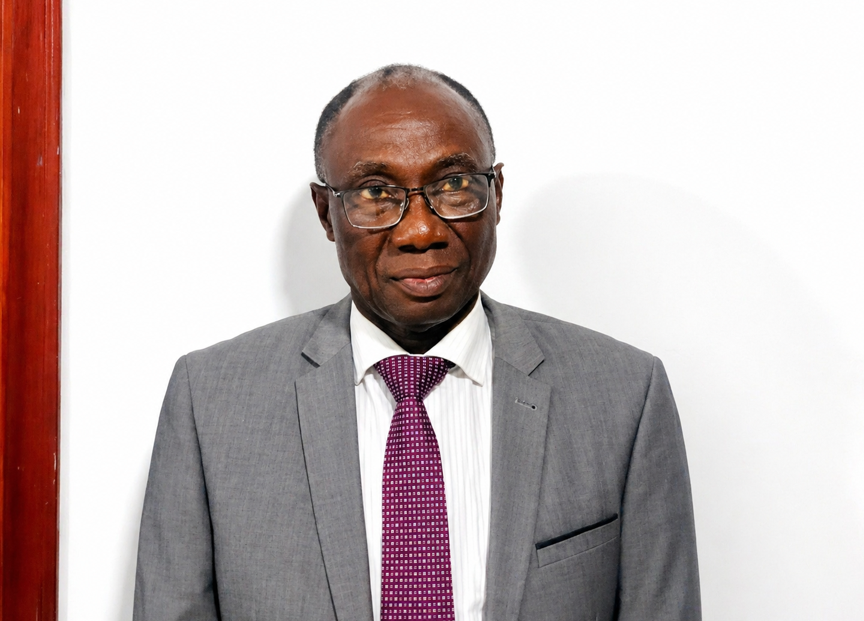
This was revealed by former Power Minister and ex-Chairman of Parliament’s Mines and Energy Committee, Dr. Kwabena Donkor.
He warns that while global industry giants are actively expressing interest in Ghana’s oil blocks, regulatory uncertainty and slow legal reforms are undermining the country’s competitiveness in the West African upstream oil and gas space.
Dr. Donkor disclosed that several major international oil companies, including Chevron, ExxonMobil, Shell, and Eni, are currently interested in investing in Ghana’s upstream sector, however, pending regulatory clarity.
He cautioned that Ghana’s slow pace in finalising reforms to key petroleum legislation is creating uncertainty that could redirect investments elsewhere.
“We are still lagging in the review of the Petroleum Commission Act and related issues. We need to attach far more importance to that than we have done presently. Because we have some of the majors knocking at our doors, wanting blocks,” he revealed.
He mentioned that “Chevron, ExxonMobil, Shell, and even ENI want other blocks. We have some of the big majors waiting for the completion of our review for them to sign up for new blocks.”
Stalled Legal Reforms at the Center of ‘Waiting” Investment
Dr. Donkor clarifies that the challenge is the prolonged review of key petroleum governance frameworks, including the Petroleum Exploration and Production Act (Act 919), the GNPC Act, and the Petroleum Commission Act.
According to Dr. Donkor, although the government has publicly announced intentions to modernise these laws to improve competitiveness, the process remains incomplete, delaying new licensing rounds and investment commitments. He stressed that without a clear and updated legal framework, international oil companies are unable to fully commit to long-term exploration and production programmes in Ghana.
It is noteworthy that although the Minister for Energy has committed himself to the reform Agenda, the machinery of government and the bureaucracy is proving too slow for the resuscitation of the upstream petroleum sector.
Ghana Losing Ground to Côte d’Ivoire
Dr. Donkor further cautioned that Ghana is gradually losing its competitive edge in the upstream petroleum sector, particularly to neighbouring Côte d’Ivoire, which he described as more responsive and attractive to investors.
He argued that regulatory predictability, faster licensing processes, and clearer fiscal terms have made Côte d’Ivoire a preferred destination for upstream capital in the region.
“You can’t hold capital hostage. Capital sees the whole world as one global village. So, if there are opportunities in Ghana and they are not coming up fast, they may look at other areas,” he emphasized.
He continued, “We have lost our competitiveness. Cote d’Ivoire is far more competitive in the E&P space than we are. And that is why we are reviewing our laws to reestablish our competitiveness. And therefore, there is an urgent need for us to do that.
What The High Street Journal Sources Say
Meanwhile, The High Street Journal is picking up indications of reduced activity levels within the Petroleum Commission, which industry watchers partly attribute to the stalled upstream investment pipeline.
With fewer active licensing negotiations and delayed new block allocations, internal momentum within the regulator is believed to have slowed.
Moreover, the issue also carries political weight, as the current administration, while in opposition, had previously been vocal in criticising what it described as weak upstream investment performance and slow sector reforms. This background is now intensifying expectations that government will fast-track the legal review process to unlock new investments and restore momentum in the petroleum sector.
Call for Urgent Reform to Restore Investor Confidence
Dr. Donkor is urging government to expedite the completion of ongoing legislative reviews, arguing that delays are directly undermining Ghana’s ability to attract fresh capital into exploration and production.
He emphasised that a modernised, predictable, and investor-friendly legal regime is essential if Ghana is to reassert itself as a leading upstream oil and gas destination in the sub-region.
“There is a need to complete that review quickly, so that companies waiting will know what they are signing up to. We must do that urgently, making them more appropriate and attractive. We have lost leadership to Côte d’Ivoire. We must reclaim the leadership, but we can only reclaim the leadership by improving our governance of the sector, our laws, and also becoming more predictable,” he appealed.
Until then, he cautions, Ghana risks watching critical investment opportunities slip away to more agile competitors.