
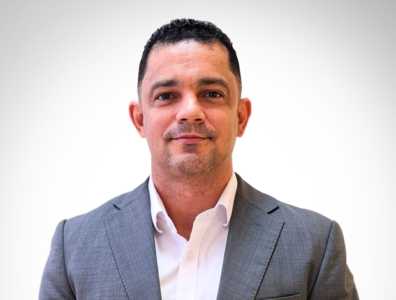
Helder Machado, Angola deputy general manager at TechnipFMC, talks to The Energy Year about the importance of Angola as a hub for delivering projects across Africa and beyond, and the cost and efficiency benefits enabled by the company’s integrated EPCI platform.
TechnipFMC is a technology provider to the traditional and new energy industries that delivers integrated projects, products and services worldwide.
- Angola’s mature offshore base is becoming a platform for faster, lower-risk project execution, particularly in subsea developments.
- Deepwater growth is shifting towards projects where execution complexity, system integration and schedule certainty matter as much as scale.
- Integrated delivery models are becoming more attractive than multi-vendor approaches as operators look to shorten cycle times and control costs.
How does TechnipFMC’s footprint in Angola translate into execution confidence?
Angola is one of our key markets. We have been in the offshore sector here for more than two decades, supported by our operational base at Sonils in the Port of Luanda. That footprint provides execution confidence in several important ways.
First, we have a deep understanding of the installed base because, in many cases, we were the ones who initially installed it. Second, our engineering, manufacturing and project teams are based in the country, so we are not relying on resources from outside. Third, local content is not something we add at the tender stage. It is built into our daily operations.
Block 17 with TotalEnergies remains one of the strongest examples of our long-term continuity. We have supported the block since the original Girassol development and have continued to play a central role across successive phases. Recently, we have been involved in the first subsea life extension contract for Girassol, and subsequently for Dalia. At the same time, infills and tie-back projects such as Begonia, CLOV Phase 3 and Dalia Phase 5 continue to come online, adding production to existing infrastructure.
We also support other operators. Azule Energy has been a key client in Angola, following our long-standing relationships with Eni and BP. We recently delivered one of the largest flexible supply projects in Africa, and we have continued supporting Azule Energy on Block 15/06 with Ndungu and on Block 31 infill development. On Block 18, we successfully delivered hardware, including subsea production systems, flexibles, and umbilicals.
How is TechnipFMC positioned for Angola’s new wave of deepwater projects?
Kaminho, like Agogo and Greater PAJ, illustrates the continued momentum in deepwater developments. They show an evolution towards large-scale developments where execution complexity, system integration and schedule certainty are key. The focus is no longer on size, but on how efficiently and predictably projects can be delivered.
Beyond sanctioned projects, we see a strong and sustained pipeline driven by developments and exploration activity by TotalEnergies, Azule Energy and Shell, which are reinforcing Angola’s position as a deepwater hub.
Our positioning for this next phase is built on three core elements. The first is our integrated delivery model, iEPCI, which shortens cycle times and improves overall project efficiency. The second is our Subsea 2.0 platform, which allows us to configure standardised solutions rather than redesigning equipment for each new project. The third is our track record of delivering complex deepwater projects for major operators in Africa and worldwide.
We were selected by TotalEnergies for the GranMorgu project offshore Suriname, by Shell for Bonga North in Nigeria and by Petrobras for Atapu 2 and Sepia 2 in Brazil, among other developments.
How do you approach local content and incorporate it into your decisions?
Angola is not just a strong operational base for us. It is a hub from which we deploy talent, capabilities and execution across Africa and beyond. We have built a skilled local workforce and a robust pool of African talent that supports subsea projects across the continent, while being fully connected to our global network of engineering centres, manufacturing facilities and offshore assets.
For us, local content has never been about compliance. It is how we have built and scaled our business in Angola. Today, around 86% of our workforce in the country – including engineers, technicians and offshore personnel involved in complex deepwater operations – is Angolan. We have also established local manufacturing and assembly capabilities to create lasting industrial value.
Across major assets in Block 17, Block 15/06 and Block 18, Angolan teams are at the core of execution, playing a direct role in offshore campaigns, daily operations and safety performance. Angola has also become a training and knowledge hub for our broader African operations. Technical personnel from Namibia and other emerging markets are trained and gain hands-on experience here before supporting developments in their home countries.
What are TechnipFMC’s strategic priorities in Angola and beyond?
Angola is a regional platform for us to support deepwater development beyond a single country. As markets embark on their first offshore projects, they don’t just need technology, but also experience, credibility and strong execution discipline. We bring the ability to leverage the teams, operational knowledge and offshore expertise that we have built in Angola to support those developments from day one.
Looking ahead, our strategic priorities are aligned with where the market is heading. The first is integrated delivery. As companies plan the next wave of deepwater projects, we expect a shift towards integrated approaches rather than multi-vendor models.
The second is standardisation. We have developed a global configured-to-order model that allows us to tailor solutions while benefiting from standardisation and simplification. The TotalEnergies Block 17 framework agreement demonstrates the value this approach can bring.
The third priority is the acceleration of subsea tiebacks and life-of-field extension projects. Angola has a significant installed base, with numerous existing hubs surrounded by marginal fields that can be developed efficiently through subsea tiebacks or infills. Our fully integrated model, supported by our fleet of construction vessels, allows us to deliver these developments as a true one-stop shop, optimising both cost and execution schedules.