
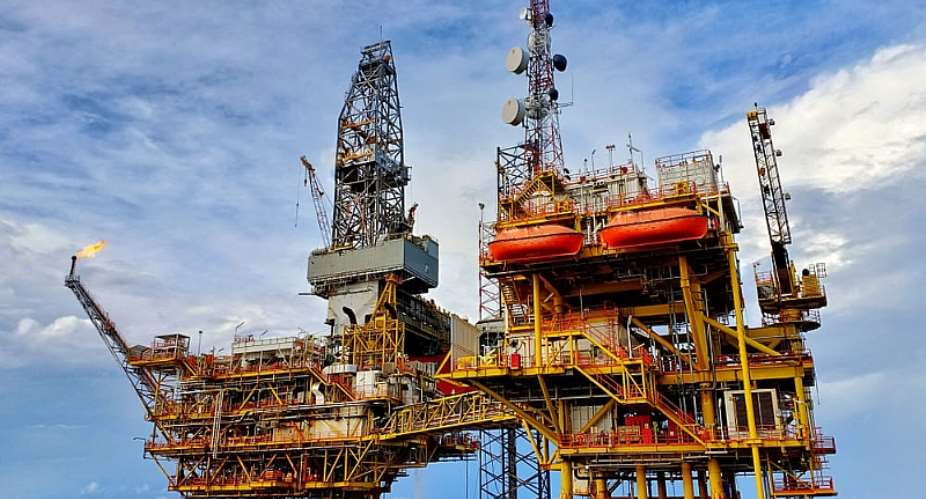
Ghana’s offshore oil and gas industry is showing renewed signs of recovery after years of declining output, with new drilling activities, planned investments and licence extensions expected to boost production and strengthen the country’s energy security.
The positive outlook follows an operational update from the lead operator of the Jubilee Field and the Tweneboa, Enyenra and Ntomme (TEN) Fields, which indicates that drilling programmes are progressing as planned and production levels continue to improve.
At the Jubilee Field, five of the six wells scheduled under this year’s drilling campaign have been successfully completed. The operator said the programme remains on schedule, with the final well expected to come on stream in September.
Current oil production at the Jubilee Field has exceeded 94,000 barrels per day, reflecting improved operational performance.
Production at the TEN Fields has also surpassed expectations, averaging more than 14,000 barrels of oil per day. Combined output from the Jubilee and TEN Fields has now risen above 100,000 barrels per day.
The operator also reaffirmed its commitment to supporting domestic energy supply by continuing to provide an average of 115 million standard cubic feet of gas per day from the Jubilee Field to the Ghana National Gas Company.
The gas will be supplied at a reduced price of US$2.50 per million British thermal units (MMBtu), down from the previous price of more than US$3.08 per MMBtu, a move expected to lower power generation costs.
The Jubilee and TEN partners said operational performance has remained strong, with average facility uptime exceeding 99 per cent between January and May 2026.
A major milestone for the sector is the recent approval of the Greater Jubilee Plan of Further Development, which will support the drilling of up to 20 additional wells across the Jubilee and TEN Fields.
The programme is backed by an estimated US$2 billion investment aimed at sustaining production, increasing reserves recovery and enhancing long-term output.
The partners expressed optimism about future prospects and pledged to keep stakeholders informed on the progress of ongoing and planned activities.
Industry stakeholders have welcomed the developments, describing them as a significant step towards revitalising Ghana’s upstream petroleum sector after several years of production decline.
They also noted that the reduction in the price of natural gas is expected to lower electricity generation costs, reduce operational expenses for businesses and manufacturers, and ease the overall cost of energy for households.
According to industry observers, affordable and reliable energy remains critical to supporting Ghana’s industrialisation agenda and the government’s 24-hour economy policy, making sustained investment in the upstream petroleum sector essential for long-term economic growth and energy security.