
Within days of taking office incoming Prime Minister Andy Burnham is preparing to announce new drilling for oil and gas in the North Sea as well as taking public control of Thames Water.
Burnham’s team has asked the civil service to draw up plans for new energy and water policies that can be revealed as soon as next week, according to people familiar with the matter. He will succeed Keir Starmer as premier on Monday and is planning a series of public statements in his first days to mark a change from the previous administration.
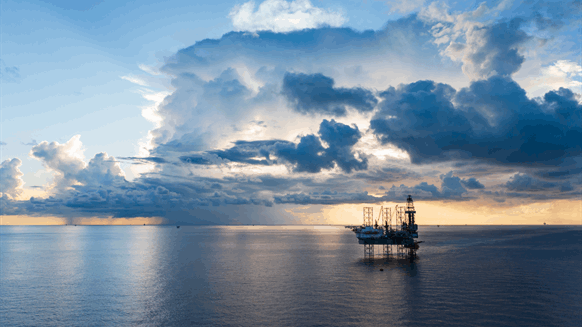
Officials are working on a range of options, the people said. They include signaling a willingness to approve new drilling at the Jackdaw gas and Rosebank oil fields off the coast of Scotland, and an expansion of so-called tie-backs which allow further drilling on or near existing ones.
No final decision has been made on what form the North Sea announcement will take, but Burnham is likely to indicate that he is in favor of more drilling, the people said. A spokesperson for Burnham declined to comment.
The future of North Sea oil and gas has become even more of a political flashpoint since the start of the Iran War, which has prompted countries to turn to homegrown energy sources. The current Energy Secretary Ed Miliband has resisted calls from some corners of business and politics to allow new drilling licenses, instead ramping up renewables.
But he has faced powerful critics including US President Donald Trump and RenewableUK, a professional association with members from both the traditional energy sector and the newer, cleaner one.
Government officials expect Burnham eventually to back at least the Jackdaw project, but public consultations have recently been launched on Jackdaw and Rosebank so his government may not be able to formally approve them before those have run their course — a constraint that has also bound the current energy secretary.
Previous approvals for the fields were overturned by the courts. And the ultimate decision will rest with the person Burnham names to Miliband’s post, because such project approvals are not a cabinet decision.
Burnham has said he won’t name his new ministers until he takes office Monday. Miliband has been a staunch supporter of net zero policies, although has expressed a willingness to be pragmatic on North Sea oil and gas.
New drilling would draw criticism from environmentalists and some on the left of the Labour Party who have opposed it on the grounds that it would damage Britain’s net zero commitments.
One official said approving Jackdaw and Rosebank wouldn’t breach Labour’s manifesto pledge to ban fresh licenses to explore new oil and gas fields, because the licenses were granted under the previous Conservative government.
The proposal was criticized by those who support a transition to green energy. Tessa Khan, executive director of nonprofit campaign and research organization Uplift, said it would be a “mistake” for Burnham to “cave into the demands of the profiteering oil and gas industry” and warned such a decision would be “out of step with the majority of voters.”
The policy was also attacked by Green Party leader Zack Polanski who said new drilling in the North Sea would be a signal the UK is stepping back from its climate commitments. He said the government should be focusing on renewable energy instead.
Thames Water
Burnham’s aides have also tasked the civil service with preparing an announcement on the public control of Thames Water. They have told officials they want to make water a priority.
One of the options being drawn up is putting Thames Water into special administration, a form of temporary nationalization. Some officials working on the transition plans see it as likely Burnham will proceed with that outcome for the utility, which supplies 16 million customers in London and the surrounding areas.
Explainer: Why Thames Water Is Edging Closer to State Control
Burnham said in an interview with the Guardian in June that Thames Water should be nationalized. However, it remains unclear if he means temporary or permanent nationalization and the regulator Ofwat is holding off on any decision about the future of Thames until it has greater clarity.
Talks between Ofwat and senior creditors — including Apollo Global Management, Elliott Management and Silver Point Capital — have ground to a halt amid the transition of power from Starmer to Burnham. Thames Water yesterday said it needed a decision on a rescue deal by October, as it is due to run out of money in December.
The chief executive of Thames said he would respect whatever decision the new prime minister makes on the future of the company, and is keen to work with him on his plans.
“I very much respect for him needing or saying that there needs to be greater public control,” Thames CEO Chris Weston said in an interview. “I would point out there is a huge amount of public control already over water companies.”
In recent weeks the government has shifted its stance on the future of Thames, saying it is now prepared for any outcome, having previously said it prefers a market-led solution. Polling by YouGov showed 82% of Britons support nationalizing water companies.
Burnham is interested in pursuing an approach similar to mutualization, which would see water companies converted into not-for-profit cooperatives owned and run for the benefit of customers, according to people familiar with the matter.
The new prime minister favors the approach which would cost less than straightforward nationalization and would be more feasible to achieve, the people said. Politically it would also have the support of Labour MPs who argue it offers an route to public ownership that’s more affordable within the country’s current fiscal constraints.
Burnham will give a speech on Friday – his first since being confirmed as the next Labour Party leader – in which he will criticize the move to increased privatization in the UK since the 1980s and underline his commitment to more public control.
Burnham will argue that an “authentically Labour” administration should press ahead with a program of more public control, reindustrialization and putting more power into the hands of communities through devolution.