
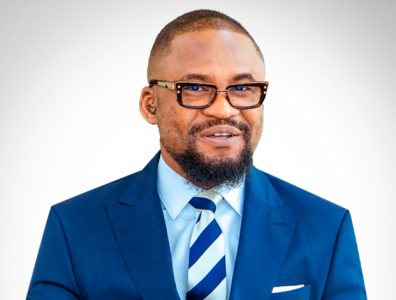
Dr Kayode Thomas, CEO of Bell Oil & Gas, talks to The Energy Year about the company’s strategy of expanding local manufacturing through its Lekki Free Zone facility and how strong technical partnerships are driving long-term capacity development. Bell Oil & Gas provides oilfield services with a focus on Nigerian content and indigenous engineering solutions.
How would you describe the company’s growth over the past year, particularly in terms of training local personnel and developing Nigerian content?
The growth of the company has been phenomenal. Like many others, we faced a downturn just before and during the pandemic. We broke ground on our new facility in September 2020, right in the middle of it, which posed serious challenges. But in a roundabout way, it worked in our favour. Construction could continue because we were in the free zone, and while everyone else had their hands tied, we were building a plant.
Our growth has been steady, organic and deliberate. We’re not in a rush, because we know we’re here to stay. Everything we’ve done has been by design. From day one, our vision has been to be the reference point for local content development in the Nigerian oil industry. It’s much easier now for people to connect with that vision because there’s a broader focus on local content. But in 2002, when we started, it wasn’t even a concept. The NOGICD [the Nigerian Oil and Gas Industry Content Development] Act came in 2010, and the Nigerian Content Development and Monitoring Board didn’t exist yet. Our drive was always to build something Nigerian, something lasting.
Today, everyone is talking about local content. But for us, that’s not a trend. It’s our foundation.
What role do technology and training play in your strategy?
They are central. We are very deliberate about our approach. Take our investment in the Lekki Free Zone facility, for example. We didn’t just build a plant. From the beginning, we sat with our technical partners to map out what we wanted to achieve in the long term. We considered staffing, training, technology and knowledge transfer. After finalising the design, there were equipment selection and procurement phases, installation, training abroad and at home, and the full onboarding of our teams. Our staff worked closely with our partners throughout the process.
That level of knowledge transfer costs money. Sending people abroad for training costs money. But for us, intellectual capacity is just as important as physical infrastructure. If we don’t have the know-how, we ask: where and how do we acquire it?
That’s why, from day one, our partners understand we’re not here for commissions. It’s about knowledge transfer, local capacity development and building long-term capabilities.
Can you give us a breakdown of the Lekki Free Zone facility and how it strengthens your local manufacturing capacity?
The project was conceived in three parts. Part one is dedicated to the assembly, maintenance, testing and painting of valves. This enables us to deliver Made in Nigeria valves to the market, reducing the industry’s dependence on imports and creating much-needed skilled employment.
Phase two focuses on pipe threading, production of pup joints and accessories. Part three involves composite pipe fabrication, which includes GRE, HDPE, GRVE and other thermoplastic materials, allowing us to supply solutions for both the upstream and construction sectors. The facility, spanning 15,000 square metres and representing an investment of over USD 10 million, also serves as a logistics and storage base for our broader operations.
This type of infrastructure is unprecedented for a local oilfield services company. It enhances not only our competitiveness but also Nigeria’s, by building real local capacity. As Engr. Felix Ogbe, the Executive Secretary of the NCDMB rightly said at the facility’s commissioning, projects like this help break our dependence on imported threaded pipes and valves, bringing lasting economic value.
How is Bell leveraging this platform to compete in regional and large-scale projects?
We’ve made a long-term bet on local manufacturing, and we’re seeing that strategy pay off. Our Lekki Free Zone facility isn’t just a milestone – it’s a national asset. Phase one of the project is already delivering value through valve assembly, testing and painting services. Phase two, which focuses on pipe threading and composite pipe fabrication, is now operational.
This investment has allowed us to drastically reduce the cost and lead time for importing threaded pipes and valves. It has also created employment opportunities and contributes to the broader Nigerian economy by strengthening domestic capacity. We have relevant Nigerian Content Equipment Certificate (NCEC) for all our services. That distinction matters – it signals to both local and international operators that we’re not just a vendor; we’re a manufacturing and engineering partner.
What’s also important is our regional reach. We’re already looking to become active in markets like Ghana, Angola, Mozambique and Chad. With more large-scale projects on the horizon – including Bonga Southwest/Aparo– we’re well positioned to expand our footprint. The infrastructure, the skills, the certification – all of that is already in place. So, when opportunities come, we’re not scrambling. We’re ready. We are currently delivering services in other parts of Africa – a footprint that speaks to the scalability and relevance of our model beyond Nigeria.
You’ve built a wide network of partners and collaborators, both locally and internationally. How essential is this network to Bell’s growth?
It’s essential. Strategic partnerships have always been the key to knowledge transfer and capacity development for us at Bell Oil and Gas. We recognised early on that doing it alone was not an option. You need the right partners. It’s what I advocate to others in the industry. When done right, these alliances create win-win scenarios. That’s how you build something sustainable.
As a strategic alliance scholar, I’m always looking for opportunities to collaborate and build partnerships. That mindset is embedded in our company. We don’t play games. We say what we do, and we do what we say. That’s how you build a track record. And over the years, we’ve had partners who’ve stayed with us for 15 or 20 years. In this industry, that says a lot. They have choices. This is a big market. So, we know that if we don’t perform every single day, someone else is pitching to replace us. It keeps us sharp.
How do you ensure the company’s values – such as integrity, equality and meritocracy – are embedded in daily operations?
It starts at the top. We’ve been committed to corporate governance from day one, even when we were just a handful of people. It’s ingrained in our culture and structure.
Every new employee goes through an induction programme that includes a personal session with me. Twice a year, I meet with all staff across the organisation. It takes me about two weeks each time, but it’s some of the most valuable time I spend. These sessions allow us to reinforce our principles, values and ethics.
We also have our Employee Value Proposition (EVP), which goes beyond salary to include healthcare, recognition, mentorship programmes, welfare and training. Everyone is encouraged to have a mentor Internally, regardless of their role. We also communicate regularly through internal newsletters and other platforms, highlighting excellence and sharing updates.
It’s a never-ending journey, but these systems ensure that our culture is alive and consistent.