
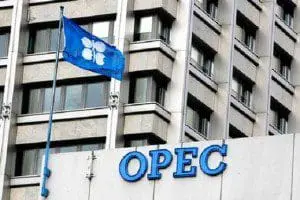
Organization of the Petroleum Exporting Countries (OPEC) Secretary General Haitham Al Ghais defended coordinated producer action as vital to oil market stability, speaking at Russia’s St. Petersburg forum on Thursday.
Addressing an energy panel at the St. Petersburg International Economic Forum (SPIEF) 2026, Al Ghais said OPEC and the countries in the Declaration of Cooperation remain central to global energy dialogue. He argued that structured collaboration among producers has cushioned price swings while serving the long term interests of both exporting and consuming nations.
His remarks landed against a tense backdrop. The forum is running through a period of disrupted supply routes, including the closure of the Strait of Hormuz, and Al Ghais used the stage to push back on talk of weakening demand. He said OPEC sees demand still growing this year and has not changed its core estimates, noting the group recently trimmed its 2026 growth forecast while raising the outlook for 2027.
“We have not registered signs of that yet,” he said of claims that demand is falling.
The session, titled “Global Energy Systems: How the World’s Energy Sector Responds to Challenges and Risks,” drew senior officials from several producing nations. Among those listed were Saudi Energy Minister Prince Abdulaziz bin Salman, Russian Deputy Prime Minister Alexander Novak, Egypt’s Petroleum Minister Karim Badawi, and Serbia’s Energy Minister Dubravka Djedovic Handanovic.
Also taking part were Philip Mshelbila of the Gas Exporting Countries Forum (GECF), Russian presidential representative for investment Kirill Dmitriev, and Alexander Dyukov.
Discussions centred on shifting demand signals, energy security and the direction of the global energy transition. Participants stressed that coordination and steady investment will be decisive in managing these pressures, especially for developing and emerging economies most exposed to price volatility.
Al Ghais tied the cooperation framework to wider economic stability at a moment of transition pressure and geopolitical strain, positioning producer dialogue as a stabilising force rather than a brake on the market.