
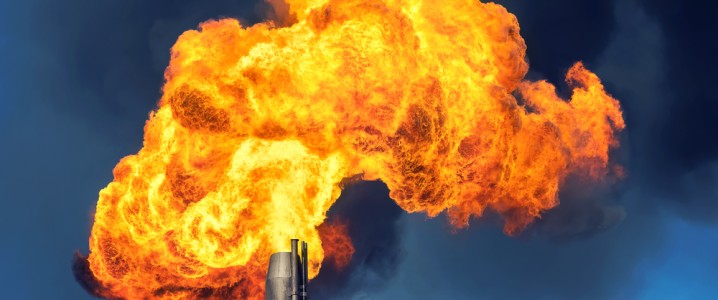
Nigeria’s state oil firm NNPC and local producer Heirs Energies have signed a deal to capture and use the gas flared at their onshore OML 17 joint venture in a bid to monetize the resource and reduce flaring.
Heirs Energies and NNPC have signed the so-called Gas Flare Commercialisation Agreements under the Nigerian Gas Flare Commercialisation Programme (NGFCP).
Under the deal, the companies will capture the gas flared across OML 17 and deploy it for use in power generation, industrial applications, liquefied petroleum gas (LPG), and compressed natural gas (CNG). The move is aligned with Nigeria’s gas development priorities and energy transition goals, Heirs Energies said in a statement.
Gas flaring has been a major issue at Nigeria’s oilfields—it is wasted instead of used for many industrial purposes, and holds back the country’s targets to reduce emissions.
Nigeria saw flaring volumes jump by 12% in 2024, which was the second largest increase globally behind Iran, the World Bank said in a report earlier this year.
In Nigeria, oil production rose by just 3%, but flaring intensity increased by 8% in 2024, World Bank estimates showed.
Flaring at oil and gas facilities operated by the national oil company NNPC, and several smaller companies, likely with limited expertise or funding for gas utilization, accounted for 60% of Nigeria’s gas flaring and 75% of the increase in 2024, the report found.
Commenting on the deal to monetize gas at OML 17, Heirs Energies CEO Osa Igiehon said that “Through disciplined investment, partnership with regulators and credible offtakers, and a clear execution focus, we are converting waste into value, strengthening domestic energy supply and supporting responsible operations across OML 17.”
Nigeria will likely need additional deals and initiatives to reduce flaring gas volumes as it looks to boost its oil production in the coming years.
Nigeria, the top oil producer in Africa, is auctioning 50 oil and gas blocks, eyeing $10 billion in new investments over the next ten years and 400,000 barrels per day (bpd) in additional production capacity.