
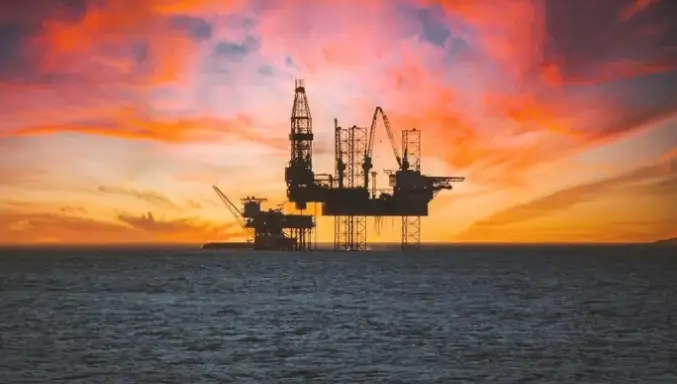
Namibia is accelerating offshore oil and gas exploration, while South Africa’s efforts to develop its share of the resource-rich Orange Basin remain held back by environmental objections, legal challenges and regulatory delays.
The two countries share the Orange Basin, which has yielded major oil discoveries and raised hopes of establishing southern Africa as a significant new energy-producing region.
Namibia controls about 30% of the basin, with the remainder falling within South African waters, according to experts.
More than 25 exploration wells have been drilled in Namibia’s sector since 2022, compared with just three in South Africa since 2014, TotalEnergies managing director Magali Pailhe told an energy conference in Cape Town last month.
The discoveries in Namibia have attracted major international oil companies from around seven countries, including France’s TotalEnergies and US-based Chevron.
“Namibia could become a major oil and gas player,” said energy economist Lungile Mashele, pointing to Angola and Nigeria, two of Africa’s biggest crude producers, as examples of its potential.
Exploration and ongoing appraisal work have yielded mostly oil, she said, with estimates of potential resources ranging from 10 billion to 20 billion barrels.
The discoveries have fuelled expectations of a significant economic boost, with hopes that production could begin within four years.
“It could experience an oil boom,” energy expert Chris Yelland told AFP.
South Africa’s offshore resource potential
South Africa’s offshore waters are estimated to hold 27 billion barrels of prospective oil resources, equivalent to more than 150 years of current consumption if fully recoverable, according to the country’s petroleum agency.
The country also has 10 trillion cubic feet of gas discovered around its coastline and onshore, National Petroleum Association of South Africa spokesperson Niall Kramer told AFP, describing this as the “tip of the iceberg”.
“If all the potential resources that we reckon could be there are proven – and that will take a while – there is probably 260 trillion cubic feet and that is massive,” he said.
The entire European Union used around 12 trillion cubic feet of natural gas during 2025, according to EU data.
Developing South Africa’s reserves could have significant economic implications, particularly as economic growth remains around 1% and unemployment exceeds 33%.
While Namibia has accelerated exploration, placing responsibility directly under the Office of the Presidency, South Africa has faced legal challenges and lengthy regulatory approval processes.
Environmental groups have gone to court in an effort to overturn authorisation granted to TotalEnergies for its proposed Deep Water Orange Basin project.
They warn that oil spills could devastate marine ecosystems and fish stocks, while expanding fossil fuel production would undermine South Africa’s commitments to green energy.
Environmental justice group Green Connection said small-scale fishing communities risked losing jobs, income and livelihoods while bearing the costs of environmental damage.
“We don’t want oil and gas exploration in our seas,” said Walter Steenkamp, chairperson of the Aukotowa Fisheries Primary Co-operative.
Kramer described the legal challenges as “delay tactics”.
“This could contribute significantly to our energy security. Not to do this is almost an anti-poor, anti-development action,” he said.
Petroleum Agency chief executive Bongani Sayidini said the government needed “favourable outcomes that would enable oil and gas exploration”.
The regulator expects the industry to have drilled 10 new wells by 2030, he said.
Source: iol.co.za