
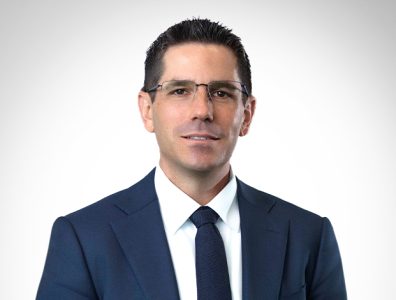
Brian Unietis, lead country manager for ExxonMobil Angola, talks to The Energy Year about the strategic redevelopment of Block 15 to support Angola’s 2030 oil output goals and the company’s use of advanced technologies to extend asset life and improve efficiency. ExxonMobil Angola explores for and produces oil and gas, operating one of the country’s most prolific deepwater blocks.
How would you sum up ExxonMobil’s successful, long-term presence in Angola?
ExxonMobil has proudly operated Block 15 for the past 31 years. This block has been central to our operations in Angola, and with the licence extended through 2037, we’re focused on optimising production and extending its life. We’re taking a balanced approach – looking for new opportunities while continuing to maximise the value of our existing assets.
This journey is about successful partnerships, and we’re investing with a long-term view. What makes it truly rewarding is the collaborative spirit shaped by the Angolan government through MIREMPET [Ministry of Mineral Resources, Petroleum and Gas] and the ANPG [National Oil, Gas and Biofuels Agency], which not only enables progress but also encourages broader investment across the sector. That kind of environment is essential for Angola’s continued growth and competitiveness.
Tell us more about the importance of Block 15 and your plans for its future development.
ExxonMobil Angola remains committed to supporting the government’s production target of 1.1 million bopd by 2030. Our portfolio is anchored by Block 15, one of Angola’s most prolific deepwater fields, which has produced over 2.7 billion barrels of oil to date.
In 2025, we secured a PSA extension for Block 15, enabling continued development through 2037 and incentivising extending the operational life of key FPSOs: Kizomba A, Kizomba B, Mondo and Saxi-Batuque. This strategic milestone reflects forward-looking decisions, strong partnerships and a long-term commitment to Angola’s energy sector. It followed the success of the 18-well redevelopment programme, which increased production by 30%, and recent discoveries such as Bavuca South-1 and Likembe-01, which confirmed additional resource potential.
From an exploration standpoint, the extension paves the way for continued activity within Block 15 and adjacent areas, leveraging existing infrastructure to reduce development costs and accelerate time to market.
What are your thoughts on measures needed to enhance the attractiveness of Angola’s upstream and the ANPG’s strategies for increasing FDI inflow into the sector?
Angola’s efforts to attract upstream investment reflect the country’s progress in creating a more transparent and efficient operating environment. Reforms to the regulatory framework, such as streamlined licensing and the role of the ANPG, have improved predictability and investors’ trust.
The government also introduced more competitive fiscal terms, particularly for mature and marginal fields. These adjustments, including targeted incentives, align well with the industry’s focus on capital discipline and long-term value.
At ExxonMobil, we’ve seen these reforms translate into real progress. In Block 15, we recently completed an 18-well redevelopment programme in partnership with Azule Energy, Equinor and Sonangol. This initiative resulted in two discoveries and increased peak production by 100,000 bopd, bringing Block 15 back to 2020 production levels.
Building on these positive results and the additional incentives provided by the government, we are pleased to say that we have recently initiated another drilling campaign and hope to continue our track record of successfully adding volumes to a strong base performance. As mentioned, Block 15 has produced over 2.7 billion barrels to date, and we look to significantly add to that total with the recent extension of our production-sharing contract with the ANPG through 2037, and continued investment in this legacy asset.
We value Angola’s proactive approach and are proud to be part of this next chapter in the country’s energy journey.
What is ExxonMobil Angola’s approach to decarbonising its operations?
In Angola, we have already reduced associated gas flaring by 94% and cut greenhouse gas emissions by 74% since 2016. In 2024, we achieved our lowest-ever annual average flaring.
Through the early project work, we study opportunities to reduce emissions and flaring and minimise downtime throughout the future of the asset. This is part of the objective and strategy for our life extension projects that are currently being progressed. We assess these opportunities based on cost, benefit and impact on emission reduction/efficiency.
By reducing greenhouse gas emissions and minimising the carbon footprint of our operations, we contribute to mitigating environmental impacts, preserving ecosystems and supporting Angola’s sustainability goals, while ensuring responsible resource development for future generations. We remain committed to working with the government of Angola and the ANPG to identify projects that align with national priorities and deliver long-term value.
How would you describe the company’s strategy related to local content and training?
At ExxonMobil Angola, we believe in building local capacity. Today, 90% of our workforce is Angolan, and 70% of our leadership roles are held by Angolan professionals. This reflects our dedication to developing talent and creating long-term career opportunities.
Equally important is the lesson that resource development must go hand in hand with investing in people. I’ve had the privilege of working alongside incredibly talented Angolan colleagues, including offshore installation managers (OIMs) who were born and trained in Angola and now lead operations on our Block 15 assets. One of our first Angolan OIMs, Francisco Ribeiro, is sharing his expertise in Guyana – another prolific oil and gas producing country – thanks to the experience and development he received throughout his career with ExxonMobil in Angola.
That kind of knowledge transfer and global mobility is a testament to the strength of Angola’s talent. For me, seeing local employees grow into global leaders is one of the most rewarding parts of our journey – and a clear signal of what’s possible.
Additionally, approximately 90% of our contracts are with local suppliers, helping to strengthen Angola’s oil and gas value chain and support the growth of local businesses.
ExxonMobil’s investment of more than USD 100 million in social projects across Angola over the past three decades is a reflection of our long-standing commitment to the country’s development and the wellbeing of its people.
We’re also deeply invested in education and youth development. Through programmes like the STEM Africa Program, the ExxonMobil Jr NBA League, Eco-Youth vocational training and teacher development programmes, we’ve reached thousands of students and young professionals across the country. To ensure long-term impact, we are also investing in teachers.
Through STEM teacher training and regional science and technology fairs, we are expanding teaching capacity and inspiring students across Angola. The results are impressive: over 40,000 students inspired, 14,000 STEM manuals distributed and more than 2,500 teachers trained in science and math subjects across provinces including Luanda, Bengo, Benguela, Bié, Kuanza Sul, Icolo e Bengo, Huambo, Namibe, Uíge and Zaire.
How is ExxonMobil driving innovation in Angola’s energy industry?
ExxonMobil is reinforcing its long-term commitment to Angola’s energy future through targeted redevelopment and exploration initiatives, most notably in Block 15.
These efforts have already yielded a significant increase in production to offset base decline, contributing directly to Angola’s national objectives of sustaining oil output and diversifying its energy portfolio. By optimising mature assets, ExxonMobil is helping to secure energy resilience while unlocking new economic opportunities.
From an innovation standpoint, the company has introduced advanced technologies such as drone-based offshore inspections and 3D sonar imaging, and we have achieved a 60% reduction in inspection duration, accelerating decision-making and minimising operational disruption.
Looking ahead, ExxonMobil is scaling its digital transformation with AI-driven robotics, digital twins and remote operations powered by 5G and satellite connectivity. These innovations not only improve efficiency but also build local capacity for high-tech energy solutions, aligning with Angola’s broader goals for technological advancement and workforce development.