
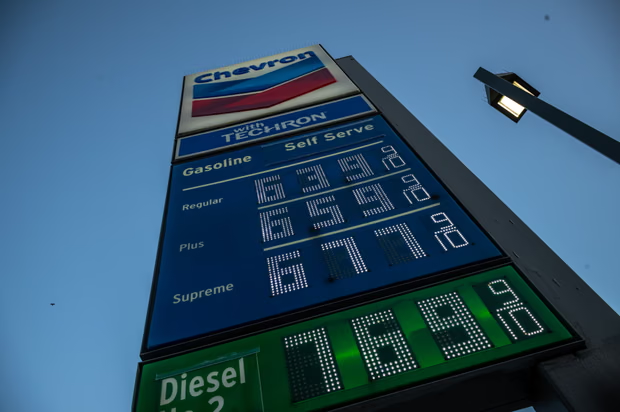
Sorry, US drivers, but don’t expect pump prices to return to prewar levels any time soon, even if the US and Iran agree to a lasting peace deal tomorrow.
As the war with Iran enters its third month, drivers have become infuriated by rising gas prices – and inflation – and Donald Trump is facing a historic backlash in the polls. The president promised recently that relief will be swift once the war ends. “I see it going down very substantially when this is over, I think very rapidly too, at levels that you’ve never seen,” he said.
Experts say it’s not that simple. As the saying goes, gas prices shoot up like a rocket and come down like a feather.
Should peace be declared, prices could fall on a kneejerk move, but it will take several months – maybe years – for prices to retreat to previous levels of about $3 a gallon nationally because checking potentially damaged energy infrastructure in the Middle East and unsnarling supply chains takes time, say energy experts.
The national average gasoline price is at $4.55 as of 22 May, up roughly $1.50 from where it was before the US and Israel attacked Iran in late February, says Denton Cinquegrana, chief oil analyst at Dow Jones Energy. “For retail prices to drop $1.50, I think we could kiss that number goodbye for 2026,” he says.