
Minister for Energy and Green Transition, Dr John Abdulai Jinapor, is expected to lead Ghana’s renewed campaign to attract investment into the country’s energy sector when he addresses delegates at African Energy Week (AEW) 2026 in Cape Town, South Africa.
The government is seeking to position a US$3.5 billion upstream investment package as a catalyst for economic growth, job creation and energy security.
The conference, scheduled for October 12 to 16, 2026, will bring together African governments, international oil and gas companies, financiers, infrastructure developers and energy service providers to discuss investment opportunities across the continent’s energy industry.
Dr Jinapor’s participation comes at a time when Ghana is working to reverse declining crude oil production, attract fresh exploration activity and restore investor confidence in the petroleum sector.
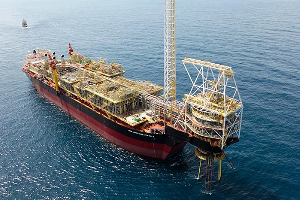
According to a report from the Ministry of Energy and Green Transition, the government’s US$3.5 billion investment programme involving Eni and the Jubilee partners is expected to support new drilling activities, optimise existing oil fields, expand petroleum infrastructure and increase domestic natural gas production.
“The government’s objective is not simply to increase crude oil production but to ensure that upstream investment delivers reliable gas supplies, strengthens industrial growth, creates jobs and expands opportunities for Ghanaian businesses,” the report stated.
Mid-Year Budget Review: Some key issues Ghanaians should look out for
According to the report, the government will use the conference to demonstrate that the country’s latest investment drive extends beyond petroleum production and is aimed at supporting broader economic transformation.
It noted that while Ghana has produced commercial oil for more than 15 years, many citizens continue to expect the sector to generate wider economic benefits through lower electricity costs, increased local participation, stronger businesses and sustainable employment.
“For many Ghanaians, the success of another multibillion-dollar petroleum investment will ultimately be measured by its impact on jobs, electricity supply, local businesses and industrial expansion,” the report emphasised.
The report explained that the government will also seek to convince investors that local companies stand to benefit from the new investment cycle through increased participation by Ghanaian engineering firms, logistics providers, fabrication companies, technology businesses and professional service providers.
It added that strengthening technical training and enforcing effective local content policies will be critical to ensuring domestic firms become globally competitive instead of merely fulfilling procurement requirements.
Natural gas is expected to feature prominently in DrJinapor’s presentation, with the report describing it as the country’s biggest opportunity for achieving long-term economic growth.
According to the report, increased domestic gas production would reduce Ghana’s dependence on expensive imported liquid fuels, improve fuel security for thermal power plants and provide more reliable electricity to support mining, manufacturing and other productive sectors of the economy.
“Ghana’s upstream resources should not only be viewed as export assets but also as the energy foundation needed to power domestic industrialisation and economic expansion,” the report noted.
The report further highlighted the government’s decision to settle US$1.47 billion in legacy energy sector obligations during 2025, describing the move as an important milestone in rebuilding investor confidence.
The payments covered outstanding arrears owed to independent power producers and gas suppliers while restoring a World Bank partial-risk guarantee linked to approximately US$8 billion in private energy investment.
According to the report, the settlement has helped improve relations between the government and investors, who had previously expressed concerns over delayed payments and the financial health of the electricity sector.
Despite the progress, the report cautioned that investors will continue to monitor the government’s ability to implement reforms that prevent the recurrence of energy sector debt, improve revenue collection, reduce distribution losses and strengthen financial discipline across the power sector.
“The challenge is no longer whether the government can clear inherited debt. The real test is whether the energy sector can operate sustainably without creating another cycle of financial liabilities,” the report said.
The report also observed that Ghana faces growing competition for energy investment from countries such as Côte d’Ivoire, Senegal, Nigeria, Angola and Namibia, all of which are actively promoting their oil and gas sectors to international investors.
It said Ghana will therefore need to demonstrate not only its petroleum potential but also the strength of its regulatory environment, fiscal framework, infrastructure and commitment to honouring commercial agreements if it is to remain competitive.
Beyond oil and gas, Dr Jinapor is also expected to outline the government’s broader energy transition agenda, including battery-backed renewable energy projects and plans to introduce nuclear power as part of Ghana’s long-term electricity generation strategy.
According to the report, the combination of petroleum development, renewable energy and nuclear power presents Ghana with a more comprehensive investment proposition that balances energy security with the country’s industrialisation ambitions.
“Ultimately, success will not be measured by announcements made at the conference, but by whether the investment delivers new wells, more domestic gas, reliable electricity, stronger Ghanaian companies and sustainable employment,” the report concluded.