
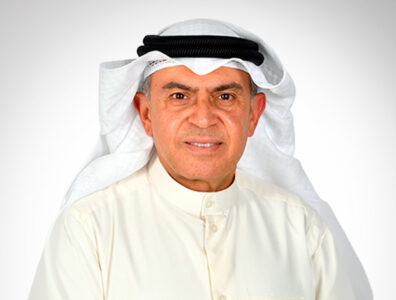
Ahmad M. Al-Ajlan, CEO, and Ivan Chikunov, General Manager – Services & Tendering of Action Energy Company (AEC), talk to The Energy Year about expanding the company’s rig fleet and oilfield services capabilities, the role of digitalisation in improving operational performance and its plans for offshore and regional growth.
Action Energy Company (AEC) is a Kuwaiti upstream services company providing drilling, workover, artificial lift and other oilfield services.
AEC is expanding its rig fleet and diversifying beyond drilling and workover into artificial lift, thermal EOR, inspection and digital services, while preparing to enter more technically demanding deep-drilling and offshore segments.
Investment in real-time monitoring, predictive maintenance, automation and AI-led digitalisation is intended to improve drilling performance, reduce downtime and support more integrated field-development services.
AEC’s listing and contract-backed financing are supporting further capacity growth in Kuwait, while the company builds partnerships and capabilities for selective expansion across the GCC.
How is AEC positioning itself to support Kuwait’s next phase of upstream growth?
Ahmad M. AL-AJLAN: Kuwait’s upstream ambitions represent a generational opportunity. Action Energy Company is positioning itself at the centre of this expansion through deliberate capacity growth and operational evolution.
We have expanded our managed fleet to 27 rigs by securing five additional 1,500-HP drilling rigs and two 750-HP workover rigs. We also achieved a milestone by winning our first ESP services contract with Kuwait Oil Company, diversifying into artificial lift and production optimisation.
Beyond equipment, we have strengthened our operating model by investing in people, reinforcing HSE frameworks and enhancing project management capabilities. This ensures growth maintains the discipline and reliability clients expect.
AEC is committed to remaining a trusted Kuwaiti partner and long-term stakeholder in the nation’s energy future.
As upstream activity increases, what are AEC’s priorities for improving drilling efficiency and maintaining cost discipline?
AMA: Operational excellence is central as upstream activity accelerates. AEC anticipated the need for greater efficiency, reliability and cost control and has built the systems to deliver them.
We invested in real-time monitoring across the fleet, giving live visibility into drilling parameters and equipment performance. This enables faster decisions and early intervention. Predictive maintenance uses data to anticipate issues and prevent unplanned downtime across our 27-rig fleet. Progressive automation reduces manual intervention in high-risk tasks, improves consistency and supports stronger HSE outcomes.
Rigorous cost discipline underpins everything – controls on procurement, resource use and expenditure ensure efficiency gains are not eroded by overruns. The combination of real-time data, predictive maintenance, automation and disciplined cost management positions AEC to deliver sustained value as activity grows.
What role does AEC expect to play in Kuwait’s offshore development?
AMA: Offshore is the next frontier for Kuwait’s energy sector and a clear part of AEC’s growth roadmap. While our core strength remains onshore, we are preparing deliberately for the higher technical, safety and logistical demands of offshore work.
We are building offshore-specific competencies in well intervention, subsea artificial lift and rigorous HSE protocols. We are also exploring strategic partnerships that combine our operational track record with specialised offshore expertise.
Our foundation – a 27-rig fleet, first ESP contract with KOC and proven ability to scale – demonstrates organisational maturity. As Kuwait’s offshore projects move into execution, AEC intends to be a capable, reliable and proudly Kuwaiti partner.
How has becoming a publicly listed company influenced AEC’s priorities?
AMA: The five-times-oversubscribed IPO on Boursa Kuwait’s Premier Market was a defining validation of AEC’s business model, growth trajectory and the strength of Kuwait’s energy services sector. Choosing the Premier Market reflected our commitment to the highest standards of governance and transparency.
Key takeaways include validation of years of disciplined growth, broader access to capital and stakeholders that support further expansion – fleet growth, acquisitions such as Target NDT, new service lines and offshore readiness – and heightened accountability that strengthens performance and partnership quality.
The strong investor response affirms confidence in homegrown energy services companies. We carry that responsibility with pride and remain focused on consistent delivery and sustainable growth.
How will AEC’s recent financing strengthen its operational capacity and competitiveness?
AMA: The KWD 40.9-million facilities from Kuwaiti banks KIB and CBK finance seven additional rigs, expanding our managed fleet from 20 to 27. Critically, every rig is tied to existing KOC contracts – capacity is financed against confirmed demand.
Results already validate the approach: H1 revenue was up 34.4% year on year, net profit nearly doubled, contracted backlog reached around KWD 349 million and utilisation was 100%. In Kuwait, this enables us to match KOC’s tendering pace with capital already in place. Regionally, it demonstrates our ability to combine operating cash flow, post-IPO access and disciplined local debt without overextending the balance sheet – credibility we will need for GCC expansion.
The capital is already earmarked and linked to signed contracts. We finance growth we have already earned.
How has AEC’s regional expansion strategy evolved?
AMA: Kuwait remains our home market and priority. With a solid foundation of operational track record, a 27-rig fleet, ESP capability, international partnerships and Premier Market listing, we are now pursuing genuine regional ambitions.
The GCC and broader Middle East offer strong opportunities as countries invest in production capacity and seek capable regional partners. Our strategy is disciplined: enter markets where our capabilities are needed and we can compete on merit; leverage international partnerships for technical backing; and expand measuredly to protect the quality and reputation built in Kuwait.
We are actively pursuing opportunities and expect AEC’s footprint to extend beyond Kuwait in the coming years while retaining the same standards of excellence and Kuwaiti identity.
How is AEC contributing to lower-carbon upstream operations?
AMA: Sustainability is already being delivered on the ground. AEC operates Kuwait’s first hybrid electric rig equipped with battery storage, significantly reducing fuel consumption and emissions. The majority of our fleet is already electric, delivering lower emissions, less noise and greater efficiency than diesel equipment.
We also maintain rigorous diesel consumption controls through monitoring and continuous improvement. These steps demonstrate that ambitious scaling and sustainable operations are compatible. As Kuwait balances production growth with environmental responsibility, AEC is leading in cleaner, smarter upstream operations.
What will define AEC’s success over the next three to five years?
AMA: Success will be defined by the totality of what we build for shareholders, clients, Kuwait and the region. In Kuwait, it means remaining the partner of choice for KOC – delivering consistently, scaling in step with national ambitions and covering key service categories from drilling and well services to artificial lift, inspection and offshore.
Regionally, it means establishing AEC as a genuine force through deliberate, capability-led growth across the GCC. We will continue leading on sustainability, building on our hybrid electric rig milestone.
Above all, success means creating an enduring Kuwaiti institution that develops local talent, maximises In-Country Value and shows that a homegrown company can compete with – and outperform – the best international players.
What progress is AEC making towards deep-drilling pre-qualification?
Ivan CHIKUNOV: AEC has not yet secured pre-qualification for deep drilling directly but is purposefully working towards it. Rather than building capabilities alone, we have partnered with an experienced international organisation that has a proven track record in complex deep-well execution. This provides access to specialised technical expertise, equipment knowledge and operational methodologies.
When pre-qualification is achieved, we will enter the segment as a prepared and well-supported operator ready to deliver at the highest level, not as newcomers learning on the job.
How is AEC supporting enhanced oil recovery and production optimisation in Kuwait’s mature fields?
IC: As Kuwait’s fields mature, focus is shifting towards maximising recovery from existing reservoirs. AEC is supporting this through diversified capabilities. We are currently mobilising four Once Through Steam Generators (OTSGs) for Kuwait’s heavy-oil facility – a direct contribution to thermal EOR that helps mobilise viscous crude.
This sits alongside our ESP contract with KOC for artificial lift and production optimisation. Together, these initiatives show we are building a broader oilfield services platform spanning drilling, intervention and multiple EOR methods. As operators prioritise recovery optimisation alongside new drilling, AEC aims to be the partner that addresses both with the right technology and operational reliability.
How will AEC’s joint venture with Kellton strengthen its digital capabilities?
IC: The 51/49 joint venture with Kellton, with a five-year initial term that is renewable, accelerates AI-driven digitalisation. Kellton supplies AI, digital engineering and cloud expertise; AEC contributes operational data from its rig fleet and field relationships. The centrepiece is the deployment of Kellton’s OPTIMA platform for real-time visibility, automation and asset optimisation.
Clients should expect progressive benefits: in the near term, improved real-time performance visibility, followed by predictive maintenance that reduces unplanned downtime and AI-assisted drilling optimisation that improves rate of penetration and cuts non-productive time.
The JV also opens additional service lines, including enterprise software, cybersecurity and systems integration, and has a regional growth path starting with an office in Doha and targeting Saudi Arabia, the UAE and Oman. Over the next two to three years, this partnership is expected to become a clear example of how AEC converts collaboration into capability.
How has AEC adapted its tendering and commercial strategy as contracting models evolve?
IC: AEC’s commercial approach is built around the reality of KOC tendering – recurring multi-lot awards rather than single mega-contracts. We compete consistently every cycle with well-prepared submissions.
Capital sequencing is deliberate: we secure contracts first, then raise matched financing, as with the January KWD 77-million awards followed by May bank facilities. We also structure bids to include performance-based and ICV elements and increasingly bid within joint structures, including existing partners and the Kellton JV, so we can offer wider service packages without carrying every capability alone.
The result is a repeatable model focused on volume, consistency and financed capacity tied to signed work, enabling clients to plan around a reliable partner.
How has AEC’s expanding service portfolio strengthened its competitive position?
IC: Clients prefer fewer interfaces across a well’s lifecycle. Two years ago, AEC was primarily a drilling and workover company. Today, our portfolio covers most stages: drilling and workover, ESPs for artificial lift, slickline and OTSGs for heavy-oil thermal recovery, inspection and integrity via Target NDT, and the digital layer through the Kellton JV.
source: theenergyyear.com