
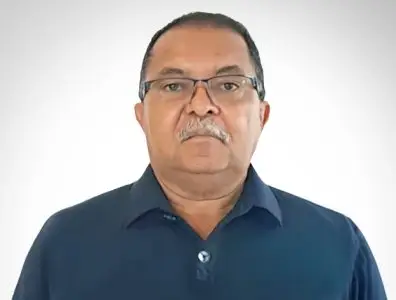
Carlos Amaral, founder of Acrep, talks to The Energy Year the company’s ambition to become the first gas-to-power IPP in Cabinda North and its development plans in the province and elsewhere in the Angolan hinterland.
Acrep is an oil and gas E&P company focused on abandoned and marginal acreage in the onshore Kwanza Basin.
- Acrep is advancing opportunities in Cabinda North and South, including renewed testing and two planned sidetracks, with a strategy focused on commercialising smaller discoveries and marginal assets that may fall below the thresholds of larger operators.
- The company aims to use its existing gas discoveries as the foundation for a gas-to-power business in Cabinda, initially serving domestic demand and potentially supporting regional electricity exports.
- Acrep intends to expand its position as an Angolan onshore operator by building experience in inland basins ahead of wider international investment, while seeking external partners and financing to develop its exploration-heavy portfolio.
What are the latest updates from your Cabinda operation?
Cabinda continues to be our main focus. It is not an easy environment, because it is in the middle of the jungle, about 70 kilometres north of the town of Cabinda and about 20 kilometres from the Republic of Congo, in a tight reservoir area.
Production tests carried out by Cabinda Gulf Oil Company in Cabinda North yielded more than 600 bopd, but the well was never put into production. However, for our purposes, anything above 50 bopd is worth pursuing, so we will repeat the test, and if we get what we expect, we will apply for development.
In Cabinda South, an independent study indicates reserves are larger than previously thought. When we acquired the participation, Pluspetrol was going to abandon the asset, but as a local company, we wanted to review the opportunity and took over as the operator.
The plan for Cabinda South is to use the existing wells to sidetrack and take advantage of the facilities already in place. We are targeting two sidetracks in the second half of 2026, and if the results are as good as we expect, we will launch a redevelopment phase. International companies typically have a minimum threshold of around 500 bopd, but for us, even much lower levels are worth pursuing.
Do you still envision leveraging gas resources in Cabinda to become a power producer?
We maintain our goal of becoming the first IPP in Cabinda, not only because we have small gas reserves from two discoveries in Cabinda South, but also because, in spite of the large amounts of power that national companies are supplying, many households still do not have electricity.
Our reserves would be the starting point. After that, we know Chevron is going to have excess gas to sell, and we are near Block 0, which may become one of the largest gas suppliers in Angola. The strategy is to generate electricity for domestic consumption first, then to export power. Angola has the potential to satisfy demand in the wider region. Kinshasa, for example, has 20 million people and an insufficient power supply. Cabinda is not only an oil story for us. It is also about gas-to-power and regional exports.
What types of partnerships is Acrep pursuing to further its projects?
We are always looking for investors. Junior oil companies like ourselves can rarely operate with their own money. We are in dialogue with several small and large companies that are reviewing our assets. Around 80% of our portfolio is exploration assets, and although all of them had yielded a discovery before we invested, most prospective partners are looking for producing assets.
Many companies do not want to wait, but the exploration business is what it is. You have to discover, confirm, appraise and develop before producing. The process typically calls for five years of exploration. If you make a good discovery, it takes another two or three years to develop it, so from the day you invest in a block to the day you start producing, it takes around seven years.
How is Acrep financing its exploration and development plans?
For Angolan companies that are starting out, there is plenty of support from the National Oil, Gas and Biofuels Agency and the Ministry of Mineral Resources, Petroleum and Gas, but the banks also need to come and sit at the table.
When Acrep began operating, we had support from two local banks, and that helped a lot. More recently, local oil and gas and services companies are all complaining that the banks in Angola only look at the US dollars we earn from oil production, not at the US dollars we need to generate that income.
Therefore, we do not approach local banks for money to fund exploration, but rather to back more commercial projects, such as power generation.
To fund exploration, we approach international banks such as Standard Bank in South Africa and Mauritius Commercial Bank.
Have your strategic priorities changed over the past year?
We aim to become one of the bigger onshore operating companies in Angola. I do not expect the main international companies to go into Malanje province or other inland areas because Angola’s offshore is still far from being fully exploited. It will be domestic companies like us to take the first steps inland. Angola has large onshore basins, and we want our teams to gain experience there in advance of the arrival of international interest and investor capital. When they do, we will be there.
Source: theenergyyear.com