
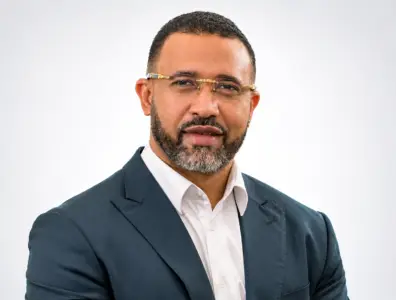
Pedro Emanuel Henrique de Macedo, Deputy Country Manager of Petrowork Solution, talks to The Energy Year about expanding the company’s integrated offshore maintenance capabilities, developing Angolan technical expertise and using Angola as a platform for growth across Atlantic energy markets.
Petrowork Solution provides structural maintenance, inspection, asset integrity and other technical services to the oil and gas industry.
- More than 75% of Petrowork’s activity is now offshore, with the company deploying multiple maintenance, inspection and integrity capabilities on major FPSO projects in Angola.
- Petrowork is investing in Angolan technical skills and new technologies, including robotic tank-cleaning solutions, as it moves towards an integrated maintenance services model.
- Angola is intended to become Petrowork’s main technical and operational centre for an Atlantic expansion strategy encompassing Guyana, Suriname, Namibia and Mozambique.
How has Petrowork evolved in Angola since 2013?
Petrowork’s strategy has always been to grow gradually and sustainably, gaining experience on the ground before moving to the next stage.
Initially, we focused primarily on working with major international service companies that work directly with operators, such as SBM Offshore, Saipem, Petromar, Ponticelli, Aker Solutions and Expro.
This was a strategic decision. Working alongside these companies enabled us to gain experience, develop technical skills, understand international quality and health, safety and environment (HSE) standards and, above all, build a reputation based on our ability to deliver.
At the outset, our activity was predominantly onshore, including work at our Viana base and Angoflex’s facilities in Barra do Dande. Today, the picture is completely different: more than 75% of our activity is related to offshore operations.
At the same time, we have invested significantly in our infrastructure in Angola. Our Viana base, covering more than 11,000 square metres, now enables us to prepare and carry out much more complex work, support offshore operations, train personnel and develop new technical capabilities.
We are now entering a new stage. Naturally, we want to continue developing our relationships with our longstanding clients, who have been and remain essential to Petrowork’s growth. However, we believe we have acquired the experience, skills, personnel and operational capacity needed to begin working directly with operators as well.
We do not want to skip any stages. We have spent more than a decade preparing for this moment.
How is Petrowork positioned to support Angola’s offshore developments?
We are currently involved in several major offshore projects in Angola, through different teams and specialities.
On the life-extension project for the Mondo and Saxi FPSOs, for SBM Offshore, whose end client is ExxonMobil, we have several teams working across different activities and disciplines.
We also have teams ready to support the N’Goma life-extension programme, likewise for SBM Offshore, whose end client is Azule Energy.
At Agogo, we work with Yinson’s teams and have developed a very positive collaboration, which we hope to expand significantly over the coming years.
These projects are particularly important to us because they demonstrate Petrowork’s evolution: our involvement is no longer limited to a single activity. We can simultaneously deploy different capabilities, including maintenance, anticorrosion protection, scaffolding, rope access, inspection, NDT, integrity solutions and other specialities, within complex offshore projects.
Our ambition is to move increasingly towards an integrated maintenance services model, in which clients can find multiple technical capabilities in a single partner.
There is also an aspect that I consider essential: local content.
For us, local content does not simply mean hiring local labour. It means developing local capabilities that can meet international standards.
That is why we invest in our training centre in Viana. We want to train Angolan technicians, give them experience on our onshore and offshore projects and create long-term technical careers.
Our goal is for Angola to be not only a market where Petrowork operates, but also the centre from which we develop capabilities to support other international markets.
How is Petrowork’s expansion into Guyana progressing?
Guyana should not be seen as a new Petrowork that is independent of what we have built in Angola – quite the opposite.
Our international strategy is directly linked to the development of Petrowork Angola. What we want to do is export and share the expertise developed in Angola.
Our training centre in Viana plays a central role in this strategy. We train Angolan workers and develop their skills on our onshore and offshore projects. Once they have gained sufficient experience, some may take part in international projects, particularly in Guyana.
This creates a very interesting dynamic: international knowledge comes into Angola, is developed and adapted locally, and Angolan expertise can subsequently be exported to other markets.
Our activities in Guyana are gradually getting under way, and we are very optimistic about the opportunities there. However, we want to grow in a disciplined manner, just as we did in Angola.
We do not simply intend to open offices in several countries. We want to build sustainable operations, develop local content in each market and, at the same time, use Angola as one of the group’s main centres of expertise.
Our vision can be summed up very simply: taking Angolan local content to the world.
How is Petrowork incorporating new technologies into its services?
Technological innovation is an important part of our strategy, but we do not pursue technology simply because it is new.
We look for technologies that solve specific problems: increasing safety, improving productivity, reducing intervention time, lowering costs for clients and reducing the environmental impact of operations.
Environmental protection has always been part of Petrowork’s policy. When we assess a new technology, we therefore consider not only its economic efficiency, but also its impact on people and the environment.
Tank cleaning is a good example.
We are investing in robotic solutions that significantly reduce the need for people to enter tanks and confined spaces, which are particularly hazardous environments.
In parallel, we are developing systems to separate and treat the waste generated by these operations. The aim is to reduce waste volumes, recover hydrocarbons wherever possible and minimise the environmental impact of the operation.
This philosophy also applies to the company’s other areas: inspection, NDT, maintenance, anticorrosion protection and asset integrity.
I believe the future of industrial maintenance will combine skilled people, technology, digitalisation and data.
Technology should enable us to work more safely, better anticipate maintenance needs and extend the life of existing assets. This is particularly important in Angola, where many offshore assets are entering life-extension programmes.
For Petrowork, therefore, innovation, safety, productivity and sustainability are not four separate strategies: they are part of the same strategy.
How do you see Petrowork developing internationally over the next five years?
Today, Petrowork is undergoing significant development in Angola. In Guyana, activities are gradually getting under way, and we see considerable potential.
Our international strategy focuses primarily on the Atlantic region.
We have chosen markets such as Guyana, Suriname, Namibia and Mozambique because we believe in their potential for energy sector development and because they have substantial needs for technical skills, training and local delivery capacity.
However, we want to apply a principle we learned in Angola: build capabilities first, then scale.
Over the next five years, we want to consolidate Angola as the group’s main technical and operational centre, progressively develop our operations in Guyana, Suriname, Namibia and Mozambique, and create a truly Atlantic network of maintenance, inspection and asset integrity services.
In South America, there is another market that has always been part of our long-term vision: Venezuela. It is a country with an extraordinary oil industry history and infrastructure, and we follow it with great interest. Any development in that market will naturally take place at the appropriate time and in accordance with the prevailing conditions.
However, geographical reach is not, for me, the only measure of success.
In five years’ time, I would above all like Petrowork to be recognised as an African company capable of competing internationally on technical expertise, safety, quality and its ability to deliver.
There is an even more important point: Petrowork was born in Angola. Much of the expertise we have today was developed in Angola, through Angolan workers and technicians working alongside some of the industry’s best international companies.
Our ambition is to turn that experience into an international platform.
We do not simply want to take an Angolan company into other countries. We want to bring Angolan expertise to other markets, train people in those markets as well, and create an international company with deeply African roots.
This is the Petrowork I would like to see in five years: an African leader in integrated maintenance and integrity services, built in Angola and internationally competitive.
Source: theenergyyear.com