
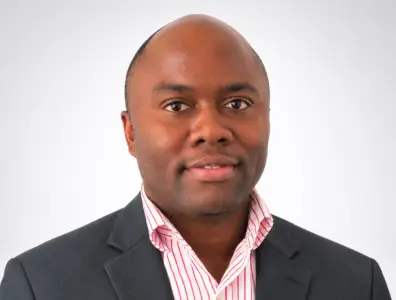
Domingos Freitas, board member of Effimax Energy, talks to The Energy Year about building a diversified upstream oil portfolio around Block KON 13 in Angola and targeting gas developments in Mozambique and São Tomé and Príncipe.
Effimax Energy is a private oil and gas E&P investor in Sub-Saharan Africa.
- Angola remains the foundation of Effimax Energy’s regional strategy, with Block KON 13 anchoring expansion through potential farm-ins in Mozambique and São Tomé and Príncipe.
- Gas-to-power is emerging as a promising investment opportunity across Sub-Saharan Africa, with Effimax prioritising gas assets and disciplined portfolio growth.
- Access to external financing remains a challenge for independent E&P companies, while a phased non-operated strategy allows Effimax to build capacity before assuming operatorship.
How is Effimax Energy structuring its upstream portfolio in Angola and the region?
Our portfolio is centred around our flagship asset in Angola, KON 13, where we signed a PSA in March 2026. Alongside that, we are progressing through negotiations and development discussions in a number of other blocks, pursuing opportunities in Mozambique and São Tomé and Príncipe, two countries that will become increasingly important to our growth strategy.
Our negotiations for an offshore block in Namibia did not materialise as planned, and the board decided to redirect efforts towards markets that are a better fit for our appetite and portfolio and offer more immediate entry opportunities. This does not mean we are writing off Namibia; it remains an attractive nearby market, but at this stage, we prefer to move faster and create value sooner.
The overall objective is to build a diversified regional portfolio while maintaining a strong Angolan foundation. We believe that balancing established assets with carefully selected new entries will provide the best platform for growth over the coming years.
Technology is becoming increasingly important in this process. Our geology team continuously evaluates tools to accelerate seismic processing and interpretation, and work that previously required up to three years can now be completed much faster. By combining modern technology with technical expertise, we believe we can shorten development cycles, improve decision-making and move more efficiently from evaluation to drilling.
What is the company’s approach when evaluating assets in new markets?
Our potential entry into Mozambique and São Tomé would be through farm-in agreements. The asset in Mozambique is a marginal, mature asset opportunity, while the one in São Tomé is a greenfield. The initial memorandums have been signed, and we expect to release details to the market by the end of 2026.
When evaluating opportunities, we are increasingly focused on the role that gas can play in the domestic energy mix. Gas-to-power is clearly becoming important across the region, and we see significant long-term potential in that segment. While we keep part of our focus on oil, we believe gas assets and gas-to-power projects are the most promising new investments at the moment. The goal is not simply to add acreage, but to build a portfolio that can generate value and sustainable growth.
Why is Nigeria not an immediate priority despite its potential?
Nigeria is a market we know well that remains part of our long-term strategy, as it offers enormous opportunities across onshore, offshore and swamp environments. However, strategy is also about focus. At this stage, we believe our resources are best dedicated to Angola, Mozambique and São Tomé, markets where we have a presence or where entry opportunities are more immediate and aligned with our objectives.
Nigeria is a mature and highly competitive market, and while that creates opportunities, it also requires a substantial commitment of time, capital and management attention. Our view is that successful regional growth requires discipline, and we prefer to build strong positions in our priority countries first. Nigeria can be the natural next step after that.
How are you funding your ventures, and what is your strategy when approaching investors for support?
All upstream projects are capital-intensive, regardless of whether a company is small or large. For independents like Effimax, external funding is an essential part of growth.
Investors and financial institutions naturally prefer assets that are mature and producing. Proven projects tend to attract capital more easily because the risks are lower and returns are more predictable. For investors to become comfortable with greenfield opportunities, the asset owners need to have persuasive seismic data, reservoir studies and technical evaluations. We currently have two blocks where we expect the seismic surveys and reservoir assessments will demonstrate sufficient potential to attract interest.
Why has Effimax chosen to invest only in non-operated stakes so far?
Our immediate strategy is to acquire interests in assets while we continue building our technical capabilities and accumulating operational knowledge. We believe this approach allows us to participate in quality assets while developing a deeper understanding of how blocks are managed and developed.
We benefit from having a sister company that provides services to the oil industry, and through it, we possess significant technical capabilities and industry exposure. However, operating an oilfield requires a higher level of experience and data management capabilities.
The board originally wanted Effimax Energy to become an operator as early as 2024, but as discussions progressed, we concluded that a phased approach was more prudent. The ambition to become an operator remains, however. It is mostly a question of timing. We want to reach a point where we have the experience, the resources and the confidence to assume that role successfully.
What are your priorities for the next few years?
Our operations until 2028 will revolve around three core priorities. The first is advancing our exploration activities in Angola by completing drilling programmes and gathering reservoir data to support development decisions. The second is completing the farm-in opportunities in Mozambique and São Tomé during 2026 and 2027 to grow our regional footprint.
The third priority is renewables. We are engaging with two provincial governments in Angola and working with an international partner towards grid-connected solar projects. This combination reflects our vision for the future: building a diversified energy company that can participate in upstream growth while also contributing to broader energy development across the region.
Source: theenergyyear.com