
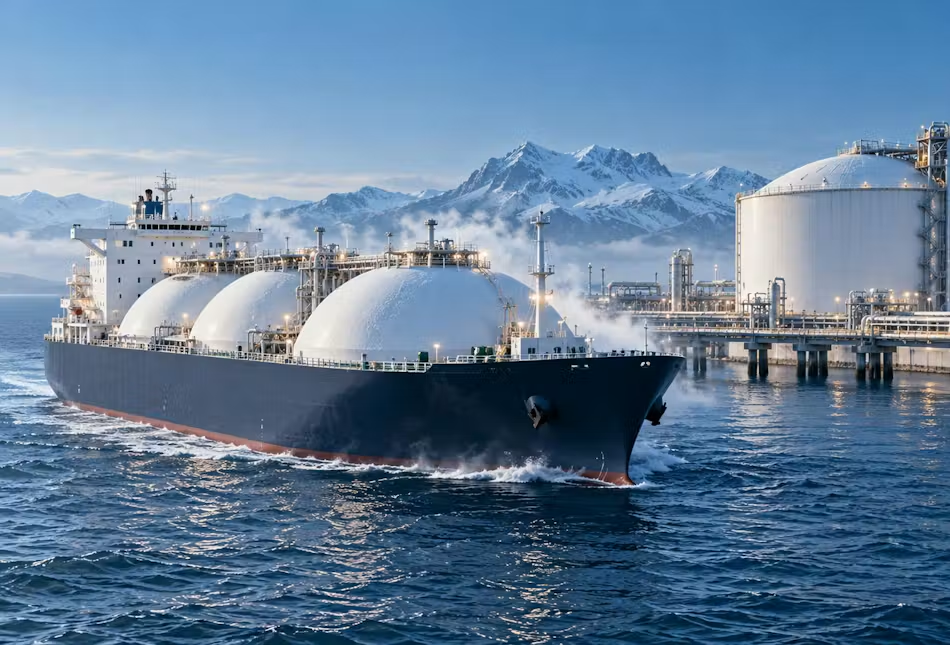
Ongoing disruptions in LNG shipments through the Strait of Hormuz, driven by regional conflicts and attacks, are tightening global gas markets with limited alternative supplies, potentially extending into 2027 as European inventories remain low amid higher prices.
Prolonged disruptions to LNG shipments through the Strait of Hormuz are putting mounting pressure on global natural gas markets, with limited spare liquefaction capacity leaving demand reductions as a key mechanism for restoring market balance.
Despite elevated prices in Europe and the Asia Pacific, alternative suppliers have limited ability to quickly replace lost Gulf exports, raising the prospect of tighter markets extending into 2027.
European gas prices remain elevated as the Northern Hemisphere enters winter with unusually low inventories. Dutch TTF natural gas futures traded around €88/MWh (about $29/MMbtu) on Oct. 19, while EU underground storage stood at 74.6% of capacity as of Oct. 18, compared with a 5-year seasonal average of about 89%. German storage was particularly low, at about 61%.
The Strait of Hormuz remains a major supply constraint. Since the Middle East conflict began in late February, around 80% of previously available LNG exports from Qatar and the UAE have been sidelined. Combined exports averaged 1.73 billion cu m (bcm)/month during March–September, compared with a 5-year pre-crisis average of 9.37 bcm/month. Renewed attacks on commercial shipping have complicated prospects for a sustained recovery in shipments.
An October analysis by the Oxford Institute for Energy Studies (OIES) suggests that prolonged supply disruptions would be absorbed primarily through reduced LNG imports and demand rather than increased production elsewhere.
Using an April 2027 restart of Gulf LNG exports as its modeling baseline, OIES estimates that delaying the recovery until October 2027 would create a 49-bcm supply gap in 2027 relative to that baseline. Other exporters would provide only 7.3 bcm of additional supply, leaving 41.7 bcm, or 85% of the shortfall, to be absorbed through lower imports and demand.
source: ogj.com