
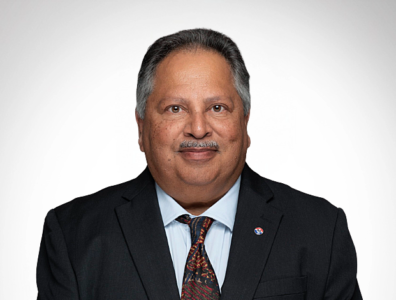
Arun Duggal, President & Country Manager of MODEC America, talks to The Energy Year about the integration of SOFEC, Inc. into the MODEC group, mooring solutions for the world’s most demanding deepwater developments and the industry’s shift towards lifecycle FPSO delivery.
MODEC is a global provider of floating production solutions with more than 50 years of experience delivering FPSOs, mooring systems and marine terminals worldwide.
- MODEC is integrating mooring expertise more closely with FPSO delivery. Following the 2026 merger of SOFEC entities into the group, MODEC aims to offer unified engineering and project execution while retaining SOFEC as a recognised product brand.
- Deepwater projects demand increasingly specialised mooring solutions. Developments in Guyana, Brazil and other offshore basins require systems tailored to water depth, environmental conditions, production requirements and offloading operations.
- Lifecycle performance is becoming a competitive priority. MODEC is focusing on long-term reliability, digital maintenance, emissions reduction and operational efficiency as clients increasingly prioritise asset performance over lowest upfront capital expenditure.
Where does MODEC see the most attractive commercial opportunities in today’s floating production cycle?
We continue to see opportunities across Guyana, Brazil, Mozambique and West Africa. The challenge is matching prospects to our backlog, our capacity and our clients’ needs. We typically target around one and a half projects a year, or two every three years, so we must be disciplined about which prospects we engage in.
Today’s large FPSO projects involve multi-year pre-FID engagement, so each pursuit is a significant investment on both sides. We treat every one as a collaborative partnership, drawing on more than 50 years of delivery experience and feeding lessons learned into our clients’ developments.
When client value most are experienced teams, robust project execution and on-time delivery for a system that will deliver for their design life. Many of our managers have come up through the front lines of engineering project execution, and operations so decades of knowledge sit directly with the individuals working on today’s projects.
What was the strategic rationale for bringing SOFEC fully inside the MODEC group?
SOFEC has been MODEC’s mooring solutions partner on 48 of 50 F(P)SOs the group has delivered, and it is now fully integrated within the MODEC Group after merging entities in 2026. Full integration enables us to present a single optimized MODEC solution, with one business development and project execution team carrying through execution. It also gives the mooring business access to MODEC’s supply chain, construction capability in China and high-value engineering centre in India.
The SOFEC brand tested strongly with the market, many refinery and export clients don’t touch FPSOs and know it only as SOFEC, so we’ve kept it as a product brand. As an example, MODEC will supply a SOFEC-branded internal turret mooring for the Coral North FLNG offshore Mozambique.
What makes deepwater basins like Guyana technically distinctive from a mooring perspective, and how do they compare with the Gulf of Mexico?
We engaged on Guyana ultra-deepwater mooring development around 2013. Water depth is one issue, but the biggest challenge is directionality: the environment isn’t especially harsh, yet strong currents, winds and waves arrive from different directions. Combined with high production rates, large riser counts and high-pressure, high-temperature reservoirs, every element of the system is stressed.
A turret mooring system would have been ideal for weathervaning and offloading, but the production and reservoir conditions ruled it out. ExxonMobil chose spread moorings — as used in Brazil — accepting a more complex offloading operation that needs a large support-vessel fleet to hold tankers in position.
The Gulf of Mexico’s challenge for FPSOs is hurricanes. Single-point moorings can be designed to allow the vessel to weathervane and to disconnect when a hurricane approaches, with a buoy that sinks below the surface so the vessel can sail away and return. MODEC have supplied three such systems in Australia, two in China and the mooring system for the Terra Nova FPSO in Canada, which disconnects for icebergs. In Mexican waters, our MV34 unit for Eni operates in just over 30 metres and can disconnect for severe winter storms.
How does MODEC differentiate itself competitively, and where does innovation fit in?
MODEC is a build-to-operate floating energy solutions company leveraging over 53 projects and 360 cumulative years of operational experience to deliver floating production systems that help our partners unlock full economic field value. For us, innovation must be measurable and deliver value across the asset life cycle of, from innovative mooring solutions to improved uptime, lower emissions and safety.
Integration with mooring system development, especially single point mooring, has allowed the development of FPSO solutions over a range of water depths from 20 meters to 3,000 meters. Today, FPSOs account for producing more than half of the world’s offshore oil.
Our current innovation efforts focus is on emissions reduction and using digital solutions to lead to optimized operations and uptime (Shape Aura). Power generation accounts for about 70% of an FPSO’s emissions so we focus on more efficient power generation by incorporating combined cycle technology, and on solutions for post combustion CO2 capture with Carbon Clean. Zero routine flaring is now a standard objective, and topsides efficiency is supported by digital optimization of power demand in real time. We are piloting drone-based inspections to survey cargo tanks in partnership with Terra Drone, and new units are specified to accommodate future inspection robotics — asset complexity has increased significantly while crew size has only doubled.
We’re also developing floating wind system technology. It remains a niche today, but our core competence transfers directly, and we want to be positioned when viable projects emerge.
How do you see the FPSO market evolving, and where is MODEC’s focus for the next phase?
The market is shifting from head-to-head competition to selection and engagement. Client’s no longer need just a contractor. They need a true partner like MODEC who stays with the asset for its entire life and focusses on resilience, reliability and performance. It’s a significant commitment on both sides and is driving more repeat business, with clients prioritizing lifecycle solutions over lowest upfront CAPEX. This is an excellent fit for MODEC with our build-to-operate approach and aligns our mindset – we think in decades not projects.
That mindset drives our work on digitalization and emissions reduction. Through our spin-off Shape, we were among the first to implement machine learning for pre-emptive maintenance, starting in Brazil in the mid-2010s, and our software is now embedded in Halliburton‘s asset integrity offerings. FPSO Bacalhau, we built for Equinor in Brazil is the first designed with combined-cycle power generation, delivering what we believe are the industry’s lowest emissions at around 9 kilograms of CO₂ per barrel of oil equivalent.
Geographically, Guyana remains the global benchmark — from zero to a million barrels per day in six years. Suriname is gaining momentum, Namibia is high on many lists, and Brazil remains a core market for deepwater FPSOs. Mozambique, the North Sea, Southeast Asia and Australia all offer meaningful prospects.
source: theenergyyear.com