
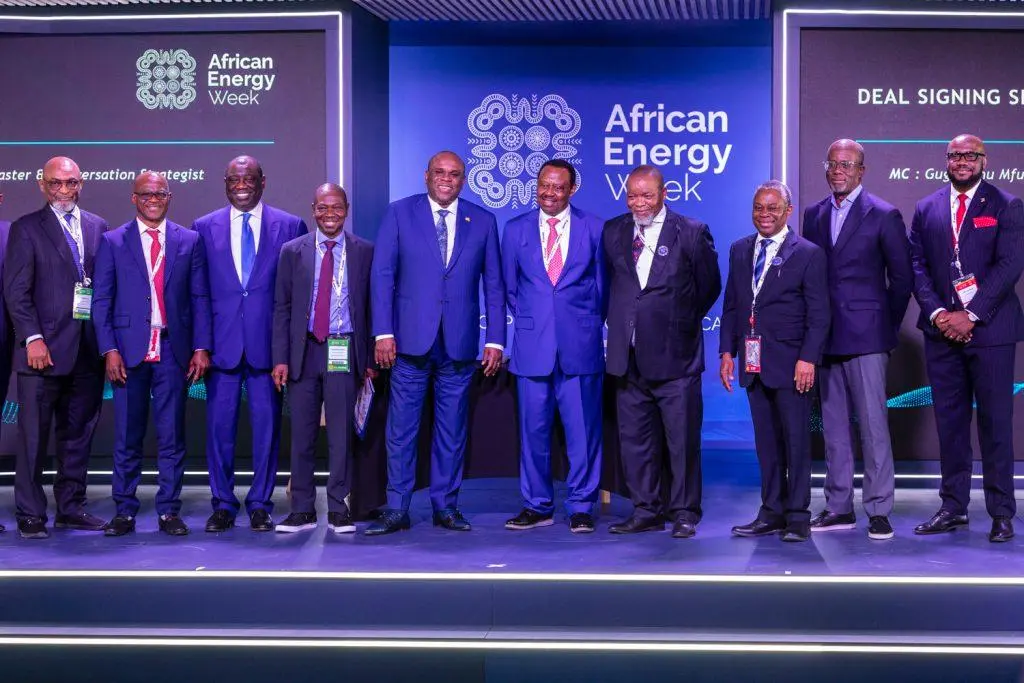
African Energy Week brought governments, oil majors, investors and financiers to Cape Town with ambitious plans for the continent’s petroleum resources. Beyond the investment announcements and declarations of energy sovereignty lies a more consequential question: how much of Africa’s energy wealth will ultimately benefit Africans? A peculiar contradiction lies at the heart of Africa’s energy economy. A continent that supplies the world with crude oil, natural gas, and some of the minerals essential to modern industry still struggles to provide electricity to millions of its own citizens.
At African Energy Week (AEW) 2026, held from October 12 to 16, petroleum executives, government ministers, financiers and national oil company chiefs gathered to discuss what organisers presented as a new era of African energy investment. Exploration opportunities were unveiled, multibillion-dollar developments promoted, commercial agreements announced and speeches delivered about the continent’s right to determine its own energy future. The spectacle had considerable substance. Nigeria reported advances in offshore oil and gas development. Angola outlined regulatory reforms and fresh investment plans. Ghana presented evidence of a recovery in petroleum production. Senegal sought partners for an ambitious domestic gas project. Namibia and Mozambique moved closer to decisions that could reshape their energy industries for decades. Yet as the conference concluded, one distinction remained essential: the difference between money announced, money sought, money committed, and money actually invested.
By the final days of AEW 2026, the African Energy Chamber was reporting significant commercial progress. Its senior vice president, Verner Ayukegba, said the conference recorded approximately $10 billion in deals. The figure underscored AEW’s growing significance as a platform connecting African energy projects with international capital. Its broader commercial impact will become clearer as agreements progress through financing, regulatory approvals and execution. A complete, independently reconciled breakdown of the reported transactions was not immediately available. Across the gathering, governments and companies presented projects at different stages of development.
Some had secured investment approval; others sought partners or negotiated commercial terms. A portfolio of 15 projects promoted through the conference’s Deal Room sought more than $16 billion in financing. Mozambique’s proposed Rovuma LNG development carried an estimated $30 billion price tag, while Senegal’s Yakaar-Teranga gas project represented a potential $7.5 billion investment across two phases. These opportunities showed the scale of Africa’s energy potential and the value of a platform that brings financiers, governments and developers together. Some projects, including the Ima gas development approved by TotalEnergies and Nigerian indigenous operator AMNI in September, predated the conference but gained renewed visibility in Cape Town.
source: newscentrality.com