
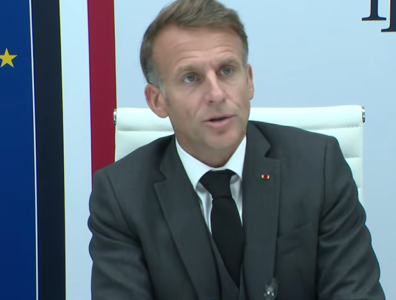
On Friday, the G7 countries agreed to release up to 100 million barrels of crude oil and diesel over the next four months. This addition of barrels comes as part of an existing 400 million barrel release that is already more than two-thirds complete. The announcement was made by French President Emmanuel Macron, whose country currently holds the G7 rotating presidency.
The Group (consisting of Canada, France, Germany, Italy, Japan, UK, US, and EU representation), came to the decision after the US floated the idea of banning diesel exports to Europe, unless the continent released some of its own strategic reserves. Despite only producing roughly 3% of the crude oil its refineries need as input, Europe produces around 70%–80% of its diesel domestically, relying on imports to cover the remaining 20%–30% shortfall.
Crucially, two of Europe’s largest crude oil and diesel sources are currently under strain. The US-Israel war on Iran has curtailed Middle Eastern exports, which normally account for 15%–20% of European supply, and sanctions effectively slashing Russian imports to zero, which usually accounts for 40%–50%. After a temporary surge in exports over the summer, China has stopped exporting diesel. India has become a lifeline, but exports primarily through the Red Sea’s Bab-el-Mandeb strait, which has faced increasing issues with transport to Europe. India’s access to Russian crude also effectively repackages sanctioned oil at a markup to European markets.
The US has historically accounted for 10%–15% of European diesel imports, but has stepped in to provide an elevated share of 30%–50% recently. But with American diesel inventories at their lowest point since 1982, and agricultural harvesting season increasing demand, there was increased urgency for a strategic release. This latest 100 million barrel release will be coordinated with the International Energy Agency (IEA), and begin with a “substantial” diesel-specific release in the first 20 days.
Analysts have cautioned that the release addresses a temporary supply gap rather than the structural loss of Russian, Iranian, and Chinese export capacity, meaning any easing in prices could prove short-lived. Brent crude briefly dipped below USD 100 a barrel on the announcement before recovering to around USD 102.
source: theenergyyear.com