
Ghana is positioning itself as West Africa’s gas trading hub, with more than $3.5 billion committed to address a supply gap that imports from Nigeria alone cannot close.
Ghana’s Minister for Energy and Green Transition, John Abdulai Jinapor, and more than 200 delegates from government, energy companies and financial institutions gathered in Accra from June 9 to 11 for the West Africa Gas Summit, organised under a partnership between The Gas Consortium and the West Africa Gas Pipeline Authority to examine how the region can close its energy infrastructure gap.
Speaking at the summit, Ghana National Petroleum Corporation (GNPC) Deputy Chief Executive Officer Hamis Ussif disclosed that partners in the Jubilee and TEN fields have committed $2 billion by 2028 to increase oil and gas production, while Sankofa partners have pledged a further $1.5 billion to boost gas output.
“We can’t meet this from domestic production, nor even with imports from Nigeria,” Ussif said, referring to demand that GNPC projects will reach about 840 million standard cubic feet per day (mmscfd) by 2030 and approach one billion cubic feet per day beyond that. Current supply averages around 425 mmscfd, drawn from the Jubilee, TEN and Sankofa fields and pipeline imports from Nigeria, with gas fuelling about 70 percent of Ghana’s electricity generation.
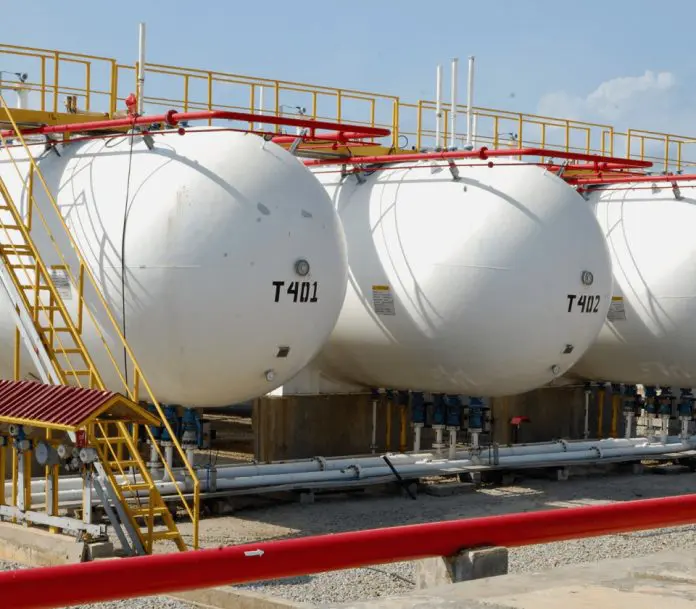
The centrepiece of the import strategy is a floating storage and regasification terminal at Tema, designed to handle up to 400 mmscfd. GNPC said the facility is approximately 95 percent complete and is expected to supplement domestic gas supply while serving markets across the region. The terminal has been under construction since 2017 and repeatedly missed commissioning targets, as of June 2025, it had still not come online. The project is backed by Helios Investment Partners and African Infrastructure Investment Managers, with LNG supplied by Shell under a contract for 225 mmscfd. GNPC committed at last year’s summit to operationalising the terminal in 2026.
The Sankofa field, which accounts for roughly 70 percent of domestic gas output, currently produces about 280 mmscfd, with plans and investment in place to lift that to 350 mmscfd. GNPC is also pursuing new exploration opportunities: it is seeking partners to develop marginal discovery clusters estimated to hold about one billion barrels of oil and 2.5 trillion cubic feet of gas, and is advancing studies in the Voltaian Basin, where conservative resource estimates exceed 11 billion barrels of oil equivalent.
GNPC sees the Tema terminal not only as a domestic supply fix but as a regional distribution point. The corporation is exploring options to supply gas to Togo and Benin through the West African Gas Pipeline, while assessing liquefied natural gas bunkering and trucking routes to countries without pipeline access, including Liberia, Sierra Leone, Burkina Faso and Mali.
West African Gas Pipeline Company Managing Director Abiodun Bodunrin said first-quarter average pipeline throughput rose to about 257,000 million British thermal units, with peak delivery volumes reaching roughly 315,000 million British thermal units, while pipeline utilisation climbed to about 60 percent during peak periods in 2025. The spare capacity provides room for the additional regional trade Ghana is targeting.
Bodunrin and other summit participants also named the constraints: payment discipline, contract enforcement and supply reliability remain unresolved risks that could hold back investment and expansion across the regional market.
The Africa Centre for Energy Policy, an Accra-based think tank, previously warned that the Tema project could expose GNPC to as much as $820 million per year in liability if projected demand does not materialise. GNPC has pressed ahead with the project, pointing to rising regional demand and spare pipeline capacity as evidence the risk is justified.