
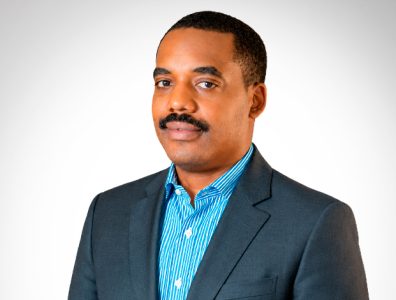
Yann Pierre YANGARI, founder and CEO of Flamboyans Services, talks to The Energy Year about regulatory reforms that are bringing upstream investors to Gabon and the crucial role gas-to-power can play in Africa’s infrastructure development.
Flamboyans Services is an energy consulting firm in Gabon that specialises in capital allocation and regulatory advisory services.
- Through ongoing regulatory reforms, Gabon is positioning itself as a more open and flexible upstream market, with a revised hydrocarbons framework, direct investor engagement and a focus on deep offshore discoveries.
- Anchor demand will be critical to unlocking gas development, with gas-to-power projects offering a pathway to stable offtake, bankable project structures and broader industrial growth.
- The successful proliferation of IPPs in Africa will depend on stronger guarantee mechanisms from state-backed entities, together with multilateral banks and financial institutions, that can reinforce bankability and help projects reach FIDs.
How is Gabon capitalising on the opportunities created by the Middle Eastern conflict and disruptions to global energy supply chains?
Gabon is currently in a very strong position. We have a new government that is encouraging investment in the oil and gas sector and is focused on deliverables, with clearly defined objectives for the next five years. A national energy master plan and a gas master plan are already in place.
The previous administration was bureaucratic and focused on one-to-one relationships with selected actors, rather than dialogue with the broader international investment community. Today, Gabon has a new attitude, and investors interested in upstream assets can approach the Ministry of Oil and Gas directly, meet with the upstream directorate, review available acreage and move quickly into negotiations.
Gabon is preparing a revised hydrocarbon code with input from oil and gas investors to create a more business-friendly framework. Gabon’s main objective is to make discoveries, particularly in deep offshore areas, and the ministry is willing to be flexible on commercial terms to make projects happen. Perenco was one of the first companies to move into this space, and now others, such as ExxonMobil and BP, are also making moves.
At the same time, marginal and mature fields are being positioned to attract more participation from local companies to develop a stronger pool of indigenous Gabonese operators.
What are the key elements for Gabon’s national gas strategy to succeed?
Gabon needs anchor demand to de-risk gas development opportunities, and gas-to-power will be key to unlocking Gabon’s gas because it creates stable demand. To that end, we are bringing in Aksa Energy, one of Turkey’s largest energy players and a company already active across Africa, to develop approximately 2 GW of gas-to-power capacity for offtake.
The IPP Mayumba gas-to-power plant, one of the country’s flagship projects, already has around 8.5 MW of capacity and is expected to expand to 50 MW. The IPP model works because the state helps facilitate discussions with oil and gas companies to ensure gas supply, while also providing commercial guarantees by purchasing electricity from the IPP, de-risking the project for investors.
More broadly, gas-to-power can play a critical role in Africa’s industrialisation, but state guarantees will be key. Most governments carry high levels of debt, making it difficult for them to provide sovereign guarantees, and this is where institutions such as MIGA, the credit enhancement arm of the World Bank Group, will be extremely important. MIGA has already begun discussions with the Gabonese government regarding guarantee structures, and this could become a turning point for IPP development.
Historically, many IPP projects involved smaller developers that first secured concessions and then tried to raise financing. Lenders would later impose additional conditions related to HSE, contract structures or PPAs, forcing developers to return to governments to renegotiate. Costs would double or triple before projects reached FIDs, and many projects took more than 10 years to mature.
The situation changes completely when the investor is an established power producer with equipment inventories and financing capabilities. For these companies, the main requirement is often a relatively limited state-backed guarantee on revenue streams. In some cases, six months of revenue coverage through a paper guarantee is enough to unlock financing, but even that can be difficult for governments to provide, so multilateral institutions and African banks need to become more involved.
How important is it to encourage the development of domestic energy companies in Africa?
It is very important. Many governments in Central Africa historically wanted to control every aspect of projects, but that model is no longer effective. In Gabon, the legal framework is now more open, although the state still plays a major role in nearly every project.
On the EPC side, local actors are already participating, but there are still relatively few local investors backing power generation and infrastructure projects. The oil and gas sector is moving faster, and local companies, such as KOREG and Eniva Petroleum, are beginning to take a more prominent role.
How can your firm help international investors navigate Gabon’s evolving energy environment?
Flamboyans Services has been operating since 2016 and has developed significant expertise in helping investors understand the Gabonese context. We act as a strategic execution partner for complex capital projects by bridging the gap between international financial requirements and the operational realities of Gabon’s energy landscape.
We support investors during negotiations with government entities and assist with concessions, MoUs, PPAs, licensing and project structuring. One reason many energy projects in Sub-Saharan Africa fail to reach FIDs is that they are designed without an understanding of local constraints. Our firm provides a double perspective that combines analytical rigour – advanced financial modelling and risk assessment – with knowledge of the realities of navigating regulations and developing projects in Gabon.
We do not just offer advice. We provide the business intelligence and execution support needed to turn market opportunities into bankable projects and profitable assets. Our expertise covers the entire project lifecycle, from conceptual design and PSA negotiations to administrative and legal support for permit acquisition. We ensure that every project is structured to meet international standards while efficiently navigating local decision-making processes. We also understand the short- and medium-term objectives of the Ministry of Energy and Hydraulic Resources and the Ministry of Oil and Gas, which allows us to help investors structure projects that align with government priorities while meeting their own financial objectives.