
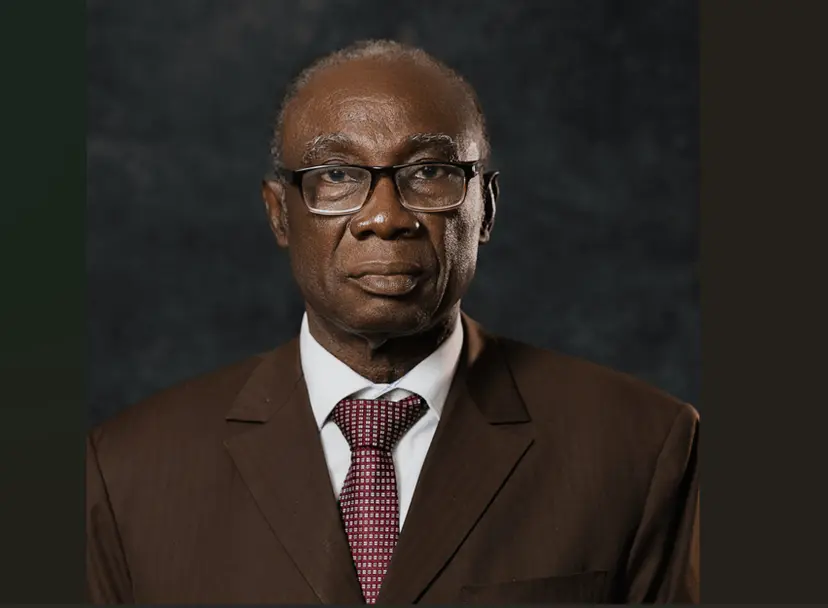
Former Power Minister, Dr. Kwabena Donkor, is urging Ghana to establish strong financial safeguards before supplying locally produced crude oil to domestic refineries, warning that the country must avoid repeating past payment challenges that left state institutions exposed.
Dr. Donkor says linking Ghana’s upstream oil production to its growing refining capacity offers major economic benefits, but only if proper financial instruments are in place to protect the state’s interests.
The former minister noted that Ghana’s national oil company, Ghana National Petroleum Corporation (GNPC), has a stewardship responsibility to account for every dollar earned from the country’s petroleum resources.
Speaking in an exclusive interview with The High Street Journal, he said, any arrangement that supplies local crude to domestic refineries must guarantee payment.
Lessons from the Past
Dr. Donkor recalled that in the past, GNPC supplied crude oil to Tema Oil Refinery, but the arrangement ran into difficulties when payments were delayed.
He recalled that GNPC in the past allocated about two million barrels of its crude share to the refinery. However, payment challenges meant the amounts remained outstanding on GNPC’s books.
Because of that experience, he believes Ghana must put stronger financial structures in place before similar transactions are repeated.
“GNPC in the past gave Tema Oil Refining two million barrels of its share. Payment became an issue. And they were still outstanding on the books of GNPC. Will you do that again?, when the corporation has a stewardship mandate, it is required to account for every penny that comes from its allocation,” he noted.
Financial Instruments to Guarantee Payment
Dr. Donkor explained that before GNPC sells crude oil to local refineries such as Sentuo Oil Refinery or Tema Oil Refinery, those refineries must demonstrate the financial capacity to pay for the crude.
He suggested that appropriate financial instruments, such as guarantees, letters of credit or other secure payment mechanisms, should be established to assure GNPC that the crude supplied will be processed and fully paid for.
Such arrangements, he said, would ensure that the national oil company does not suffer any financial losses when supplying its share of production to domestic refineries.
He emphasized that, “They must have the financial instruments to assure GNPC that each share of production and the government share that GNPC looks after will be processed and paid for.”
Linking the Upstream and Downstream
Dr. Donkor believes Ghana’s long-term petroleum strategy should focus on linking the upstream sector, where crude oil is produced, with the downstream sector, where it is refined and processed into fuels.
At present, Ghana’s emerging refineries still import crude oil from abroad despite the country producing oil locally.
According to him, creating a structured link between the two sectors would allow Ghana to refine its own crude domestically, strengthening the entire petroleum value chain.
Supplying local refineries with Ghana’s own crude oil could generate significant cost savings and economic benefits. Dr. Donkor explained that refining locally produced crude would reduce transportation and freight costs associated with importing crude from overseas markets.
Beyond cost savings, using local crude could also help Ghana retain more value within the economy by strengthening domestic refining capacity and reducing dependence on imported feedstock.
The Bottomline
For Dr. Donkor, the key to making the system work is ensuring that the financial architecture supports it. With proper financial guarantees in place, he said, GNPC can confidently supply crude oil to domestic refineries without risking unpaid deliveries.
“We should be looking at linking the downstream and the upstream. That is, if we have to expand, and they also seem to expand. So yes, the preference in the future is to have the appropriate financial instruments in place so that if GNPC sells its share of crude production to Tema Refinery or Sentuo, it will not suffer any financial consequence. The transportation and freight will be saved if we use domestic crude,” he noted.
Such a system, he added, would allow Ghana to build a more integrated petroleum industry.