
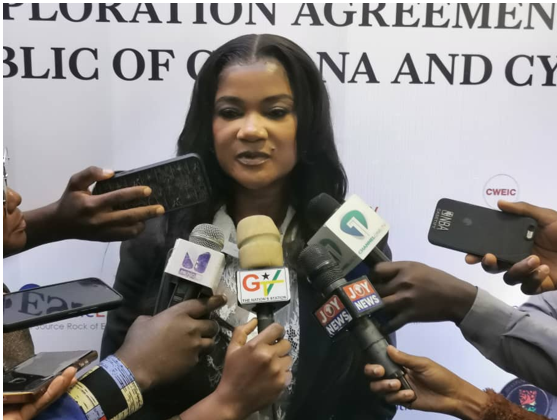
Cybele Energy, a Ghana-based independent oil and gas company, has announced plans to immediately begin exploration activities on its shallow-water offshore Block S7 in Guyana, days after signing a production-sharing agreement (PSA) with the South American country’s government.
This is expected to happen within 12 months of the PSA signing, subject to regulatory approvals and the completion of environmental and technical studies.
The deal makes Cybele Energy the first African company to secure an offshore oil block in Guyana’s rapidly expanding petroleum basin, one of the world’s most prospective emerging oil provinces.
The PSA was signed on December 9, 2025, in Georgetown. Block S7 covers about 2,000 square kilometres within Guyana’s offshore acreage.
Preliminary technical assessments by Cybele Energy suggest the block could hold up to 400 million barrels of recoverable oil, subject to further exploration and appraisal.
Under the agreement, Cybele Energy paid a signing bonus of US$17 million to the Government of Guyana. The contract follows Guyana’s updated model PSA, providing for a 10 perecnt royalty, a 10 percent corporate tax rate and a cost-recovery ceiling of 65 percent.
Speaking at a press conference in Accra, Cybele Energy’s Chief Executive Officer (CEO), Beatrice Mensah-Tayui, said the company’s immediate focus would be on subsurface evaluation, led by its geology and geophysics team.
“The next stage after signing the agreement is to commence the exploration process,” she said, adding that the first phase would involve reviewing and interpreting available seismic data to better understand the block’s geological profile.
Asked about timelines, Mensah-Tayui said the duration of the initial work programme would depend on the quality and type of seismic data accessible to the company.
Cybele Energy has also committed to complying fully with Guyana’s local content framework, including annual investments in training Guyanese nationals and support for healthcare, infrastructure and community development initiatives.
“This agreement represents a major milestone for Cybele Energy and for African participation in the global upstream sector,” Mensah-Tayui said. “We look forward to responsibly advancing exploration activities while creating long-term value for all stakeholders.”
To further deepen bilateral relations between Ghana and Guyana, she encouraged Ghanaians to collaborate with individuals and businesses in Guyana to take advantage of the opportunities presented by the deal. This, she was hopeful, would lead to continuous growth.
The deal positions Cybele Energy as the first African operator in South America and the Caribbean, and the first woman-led energy company to secure an offshore oil block outside Africa.
The award is the second to be granted under Guyana’s inaugural competitive licensing round, which was launched in 2022.
Cybele Energy’s CEO described Guyana as one of the most prolific new oil basins globally, noting that the country continues to attract increasing interest from international energy companies.
She added that the Cybele-Guyana PSA reflects a broader effort to strengthen economic cooperation between Africa and the Caribbean, anchored in shared history and future development goals.
Also speaking at the event, the Head of Mission for the Commonwealth Enterprise and Investment Council (CWEIC), Dr. John Appea, said the agreement demonstrates the practical benefits of economic cooperation among Commonwealth countries.
“The Commonwealth advantage refers to the tangible economic gains that arise when member countries do business with each other,” he said. “Shared legal and regulatory systems, common language and institutional familiarity help reduce transaction costs.”
Dr. Appea noted that trade costs among Commonwealth partners are, on average, about 21 percent lower than trade with non-Commonwealth countries.
He added that intra-Commonwealth trade in goods and services reached a record US$854 billion in 2022 and is forecast to exceed US$1 trillion by 2026.
Foreign direct investment flows among Commonwealth members have also more than doubled in recent years to about US$1.7 trillion, reflecting sustained investor confidence and deeper capital integration, he said.