
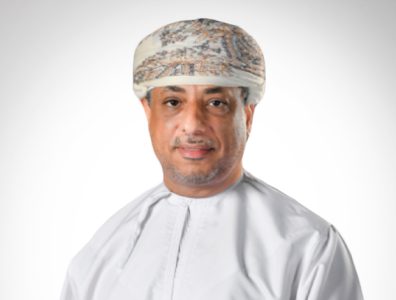
Anwar Al Kharusi, commercial chief executive of OQEP, and Jaber Al Noumani, CFO, talk to The Energy Year about the company’s involvement in Oman’s upstream landscape. OQEP holds a diverse portfolio of upstream assets in Oman and is the country’s largest pure-play oil and gas exploration and production company.
What distinguishes OQEP in Oman’s upstream landscape?
Anwar AL KHARUSI: OQEP is the upstream arm of OQ and the third-largest E&P player in Oman, after Energy Development Oman and Shell. However, while they focus exclusively on Block 6, the country’s largest hydrocarbons asset, OQEP is investing across many other blocks.
We’re a key investor in Block 61, Oman’s largest gas asset, and we partner with Oxy in blocks 9 and 53, which together produce around 150,000 bopd. We hold a diversified portfolio of 14 upstream oil and gas assets in Oman, six of which are producing, and partner with international oil companies such as Shell, BP, TotalEnergies, Oxy, Eni, MedcoEnergi, Petronas and Genel Energy. We’ve grown significantly over the past 15 years, increasing our production from just 18,000 boepd in 2009 to more than 228,000 boepd in 2024.
What is OQEP’s current offshore position?
AAK: We are one of two offshore producers in Oman, alongside Masirah Oil, which operates offshore Block 50 near Masirah Island. We are active in Block 8, with gas from the Bukha field and oil from the West Bukha field.
Currently, we’re marketing offshore blocks 18, 21, 22, 23, 8/40, 41 and 52, which span Oman’s northern to southern coastlines, looking for investment partners. Afterwards, we would go into exploration, which includes geological studies and surveys, potential seismic surveys and exploratory drilling.
The timeline to production would vary. In a success case scenario, where the first drilling leads to a discovery, we could see results within three to five years. In Block 18, for example, OQEP drilled an exploration well with our partner Reliance Energy some 15 years ago and is eager to continue such exploration efforts. We now plan a follow-up well, which could help unlock reserves more efficiently.
How has OQEP’s IPO impacted operations?
AAK: The listing hasn’t changed how we operate or our relationship with the government. We’ve always run OQEP as a financially driven company. The IPO simply enhanced our transparency and governance. Post-IPO, we have continued working with the Ministry of Energy and Minerals, for instance, in marketing 11 new concessions.
Jaber AL NOUMANI: Listing OQEP on MSX [Muscat Stock Exchange] in 2024 marked the largest IPO in Oman’s history, raising more than USD 2 billion from a 25% float. It significantly enhanced our visibility among regional and international investors and placed us among the highest market-cap companies on MSX.
Our IPO has also helped support Oman Vision 2040 by attracting FDI, deleveraging corporate and national debt, and elevating OQEP’s role in the economy, with our EBITDA reaching USD 1.6 billion in 2024. This showcases how attractive our portfolio is.
The IPO amplified investor attention significantly. For instance, we successfully signed an EPSA [exploration and production-sharing agreement] with Genel Energy on Block 54, a highly prospective block with existing wells where we are the operator with a 60% interest. We anticipate early production within three to four years. These types of collaborations are made possible by our visibility and credibility as a listed company.